
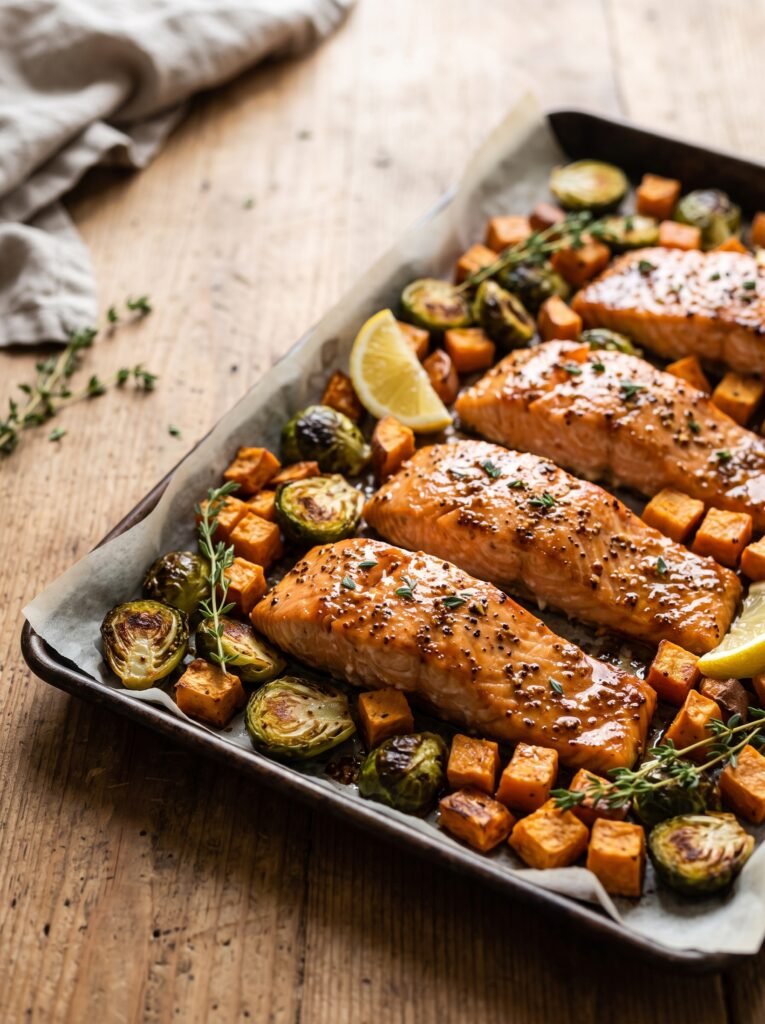
The first time I brushed maple syrup and Dijon mustard onto salmon, I was trying to use up the last spoonfuls in two jars. The glaze turned out sweet, tangy, and just right with the fish. Now I make this sheet-pan dinner with roasted sweet potatoes and Brussels sprouts when I want a cozy fall meal without a lot of cleanup.
I give the vegetables a head start in the oven, then add the salmon and brush on the glaze. By the time the fish is cooked, the sweet potatoes are tender and the Brussels sprouts have browned edges. I bring the pan to the table and serve everything with lemon wedges.
At a glance: 4 servings · about 45 minutes · maple-Dijon glaze · roasted fall vegetables
Why I Make Maple Dijon Salmon
I like this dinner because the salmon and vegetables cook on one pan, but each part still gets the time it needs. Sweet potatoes take longer than salmon, so I roast them first with the Brussels sprouts. Then I add the fish and brush on the glaze for the final stretch.
The maple and Dijon work well together: maple syrup brings sweetness, and Dijon adds a sharp, savory flavor. Garlic, lemon, and thyme round out the glaze without making it complicated. The salmon comes out tender and flaky, while the vegetables turn browned at the edges.
This is a good weeknight dinner, but I also like serving it when I want something that feels a little special. The colors look lovely on the table, and the whole meal comes together on one sheet pan.
Ingredients for Maple Dijon Salmon
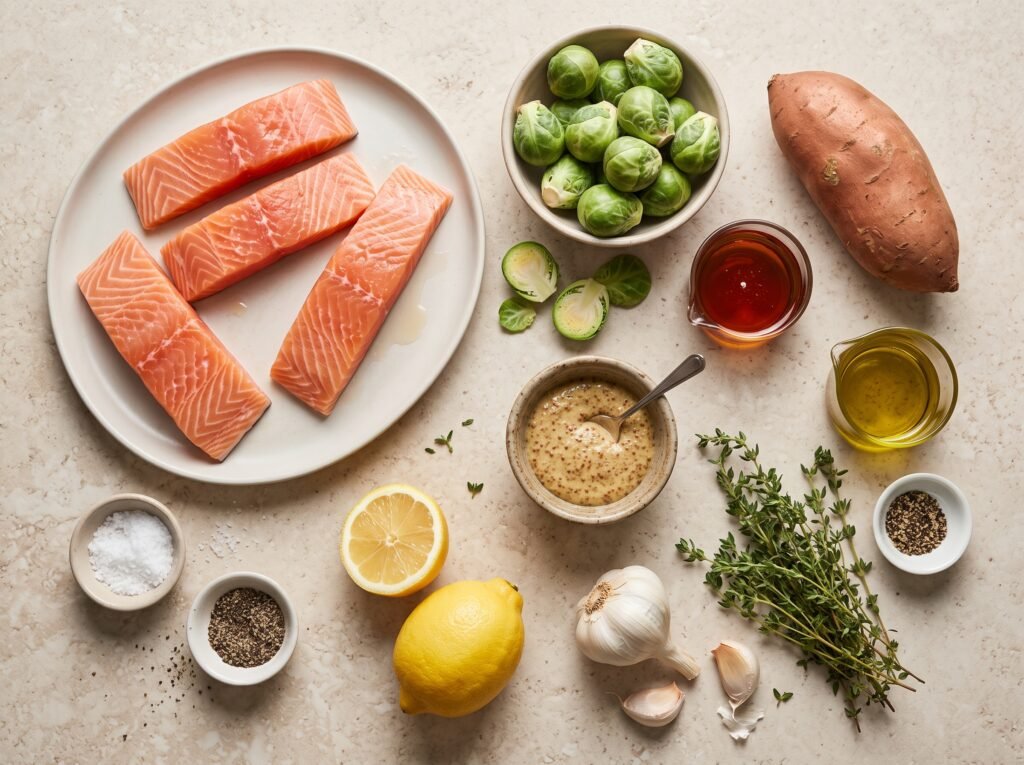
For the roasted vegetables, I use:
- 1 pound Brussels sprouts (450 g), trimmed and halved
- 1 large sweet potato (about 1 pound / 450 g), peeled and cut into ½-inch cubes
- 1 tablespoon olive oil (15 ml)
- ½ teaspoon kosher salt
- ¼ teaspoon black pepper
For the maple Dijon salmon glaze, I use:
- 4 salmon fillets (about 6 ounces / 170 g each)
- 2 tablespoons pure maple syrup (30 ml)
- 1 tablespoon Dijon mustard (15 g)
- 1 tablespoon olive oil (15 ml)
- 1 tablespoon fresh lemon juice (15 ml)
- 2 garlic cloves, minced
- 1 teaspoon fresh thyme leaves, or ½ teaspoon dried thyme
- ½ teaspoon kosher salt
- ¼ teaspoon black pepper
For serving, I use:
- 1 lemon, cut into wedges
- A little extra thyme, optional
I cut the sweet potato into small, even cubes so it has time to soften before the salmon is done. I use pure maple syrup for the glaze; pancake syrup can make it much sweeter. If my salmon fillets are especially thick or thin, I adjust the baking time and check the thickest part as it cooks.
How I Make Maple Dijon Salmon
1. Roast the Brussels sprouts and sweet potatoes
I heat the oven to 425°F and line a large rimmed sheet pan with parchment paper. I toss the Brussels sprouts and sweet potato with olive oil, salt, and pepper, then spread them out in one layer.
I roast the vegetables for 15 minutes. Giving them a head start helps the sweet potatoes become tender while the Brussels sprouts begin to brown.
2. Mix the maple-Dijon glaze
While the vegetables roast, I whisk the maple syrup, Dijon mustard, olive oil, lemon juice, garlic, thyme, salt, and pepper together in a small bowl.
I taste a little of the glaze and adjust it if needed. If I want more tang, I add a squeeze of lemon. If I want a sweeter glaze, I add a small drizzle of maple syrup.
3. Add the salmon to the pan
I take the sheet pan out of the oven and stir the vegetables. I push them toward the edges to make room for the salmon, then place the fillets skin-side down on the pan.
I brush the maple-Dijon glaze over the top and sides of each fillet. I try to leave a little glaze in the bowl so I can brush the salmon once more near the end of baking.
4. Bake until the salmon is cooked through
I return the pan to the oven and bake for 12 to 15 minutes, depending on the thickness of the fillets. I brush the salmon with any remaining glaze during the last few minutes.
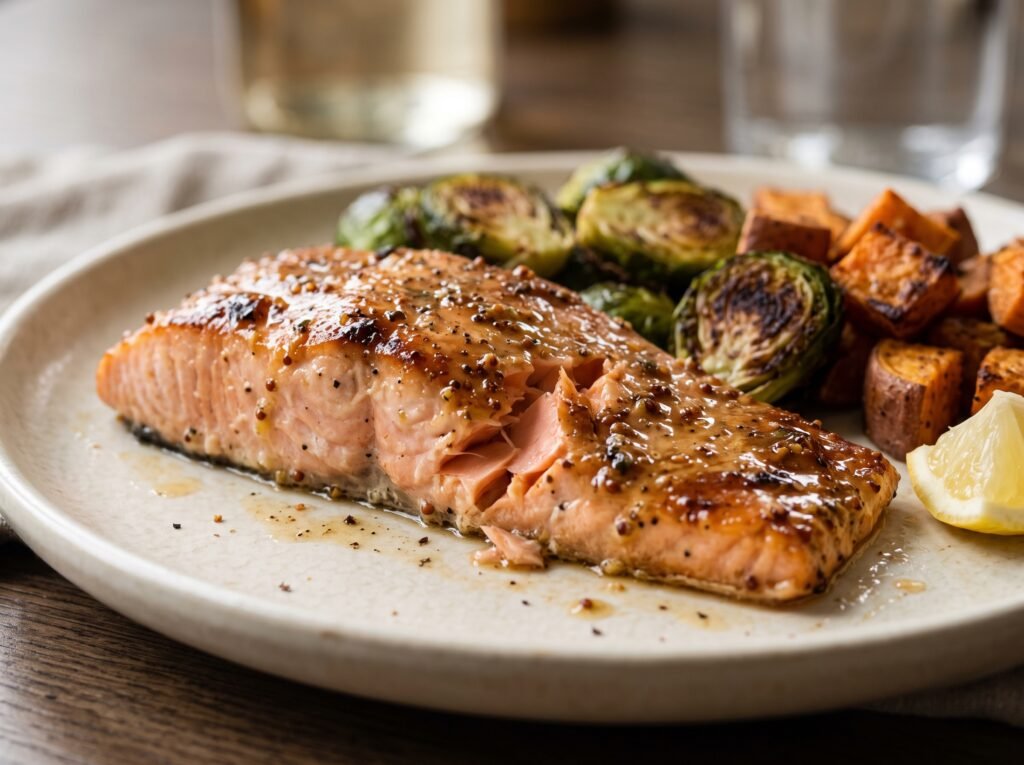
I check the thickest part of a fillet with a food thermometer; fish is cooked to 145°F. It should also look opaque and separate easily with a fork. If the salmon is ready before the vegetables, I move it to a plate and let the vegetables roast for a few more minutes.
5. Finish and serve
I take the maple Dijon salmon pan out of the oven and let everything rest for a couple of minutes. Then I add lemon wedges and a little extra thyme.
I serve a salmon fillet with a generous scoop of Brussels sprouts and sweet potatoes. If I want a bigger meal, I add rice or crusty bread on the side.
My Tips for Better Maple Dijon Salmon
- Cut the sweet potato into small cubes. I keep them around ½ inch so they cook through in time.
- Give the vegetables a head start. They need more oven time than the salmon.
- Spread everything out. Crowded vegetables tend to soften instead of brown.
- Brush on the glaze near the end. Maple syrup can darken if it stays in the oven too long.
- Check the thickest salmon fillet. Fillets can vary in thickness, so I use the thickest one to judge doneness.
- Use parchment for easier cleanup. I still use a rimmed pan to keep any glaze from dripping into the oven.
If the salmon is ready but the vegetables need more color, I take the fish off the pan and return the vegetables to the oven. That way, the fish doesn’t overcook while the vegetables finish.
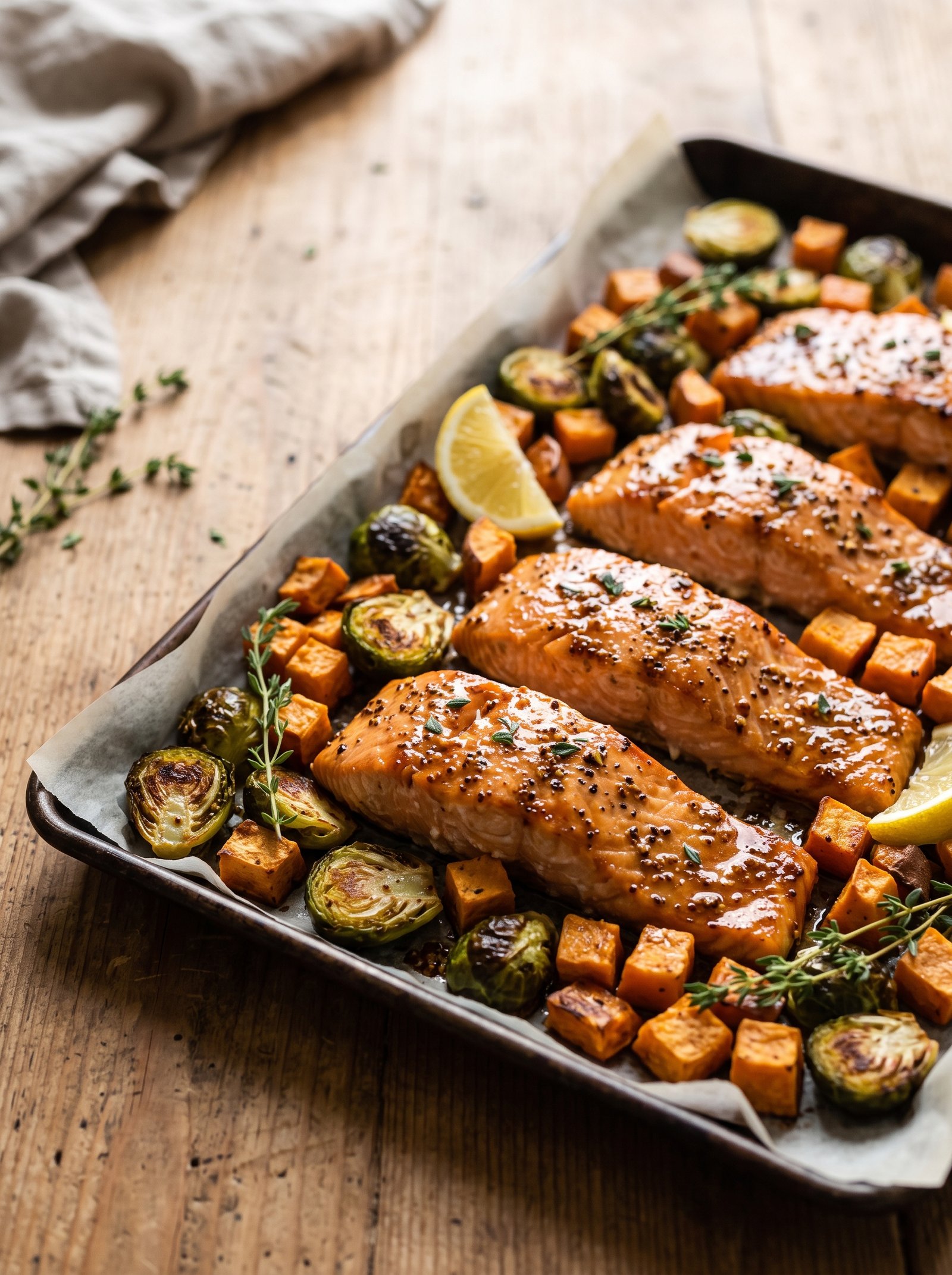
Maple Dijon Salmon
Ingredients
Method
- Heat the oven to 425°F. Line a large rimmed sheet pan with parchment paper.
- Toss the Brussels sprouts and sweet potato with 1 tablespoon olive oil, ½ teaspoon salt, and ¼ teaspoon pepper. Spread them out and roast for 15 minutes.
- Whisk together the maple syrup, Dijon mustard, 1 tablespoon olive oil, lemon juice, garlic, thyme, ½ teaspoon salt, and ¼ teaspoon pepper.
- Stir the vegetables and push them toward the edges of the pan. Place the salmon fillets skin-side down in the center.
- Brush the salmon with the maple-Dijon glaze. Roast for 12 to 15 minutes, brushing once more near the end if glaze remains.
- Check the thickest part of the salmon; it should reach 145°F and look opaque. If the salmon is done before the vegetables, move it to a plate and roast the vegetables a few minutes longer.
- Serve with lemon wedges and extra thyme, if desired.
Notes
Easy Ways I Change the Recipe
When I want a little heat, I add a pinch of red pepper flakes to the glaze. For a more herb-forward flavor, I use chopped rosemary in place of thyme.
I can swap the Brussels sprouts for broccoli florets or green beans, though I check their doneness as they roast. If I use carrots instead, I cut them into thin pieces so they soften on time.
For a different fish, I can use thick cod fillets and start checking them a few minutes earlier. The glaze also works well on chicken, but chicken needs its own cooking time and doneness check.
Make-Ahead and Storage
I trim and halve the Brussels sprouts, cube the sweet potato, and mix the glaze ahead of time. I keep the vegetables covered in the refrigerator and store the glaze separately. Before dinner, I arrange everything on the pan and bake it fresh.
I refrigerate leftover salmon and vegetables in a covered container and use them within 3 days. I reheat them gently in the oven or microwave. The salmon may be a little less tender after reheating, so I avoid heating it longer than needed.
What I Serve with Maple Dijon Salmon
I serve this salmon with the roasted vegetables straight from the sheet pan. Rice, couscous, or warm bread is nice if I want an extra side to catch the glaze.
For a fresh contrast, I add a simple green salad with lemon dressing. If I’m serving the salmon for guests, I put extra lemon wedges on the table and let everyone add a squeeze to their plate.
Maple Dijon Salmon FAQs
Can I use frozen salmon?
Yes. I thaw it completely in the refrigerator and pat it dry before adding the glaze. If the fillets are still icy, they may cook unevenly.
Can I use a different vegetable?
Yes. Broccoli, green beans, or thinly sliced carrots work well. I keep the pieces a similar size and check that they’re tender before serving.
How do I keep the maple glaze from burning?
I add the glaze when the salmon goes onto the sheet pan rather than roasting it with the vegetables from the start. I check the salmon near the end because the maple can darken as it cooks.
How do I know when salmon is done?
I check the thickest part with a food thermometer; fish is cooked to 145°F. The flesh should also look opaque and separate easily with a fork.
Disclaimer:
This recipe is provided for informational purposes. Results may vary depending on ingredients, measurements, and equipment. Follow safe food-handling practices. Nutrition information is an estimate and is not a substitute for professional medical advice.