
Finding weeknight dinners that deliver deep, comforting flavor without burdening your digestion or derailing your wellness goals can feel like an ongoing struggle. As someone who demands clean nutrition to support active recovery and joint longevity, I found that traditional restaurant preparations of Italian-American classics often leave you feeling weighed down by heavy flour dredges and excessive saturated fats. I wanted the bright, sunlit essence of fresh citrus, the savory punch of briny capers, and tender cutlets of poultry, but re-engineered for optimal cardiovascular health and digestive ease.
By searing lean cutlets in antioxidant-rich extra virgin olive oil and simmering them in a collagen-rich broth enriched with garlic and a touch of dairy, we create a silky, restaurant-quality meal on a single stovetop pan. Today, I am sharing the complete culinary blueprint behind this Creamy Lemon Chicken Piccata, crafted to elevate your weeknight dinner rotation in just twenty minutes.
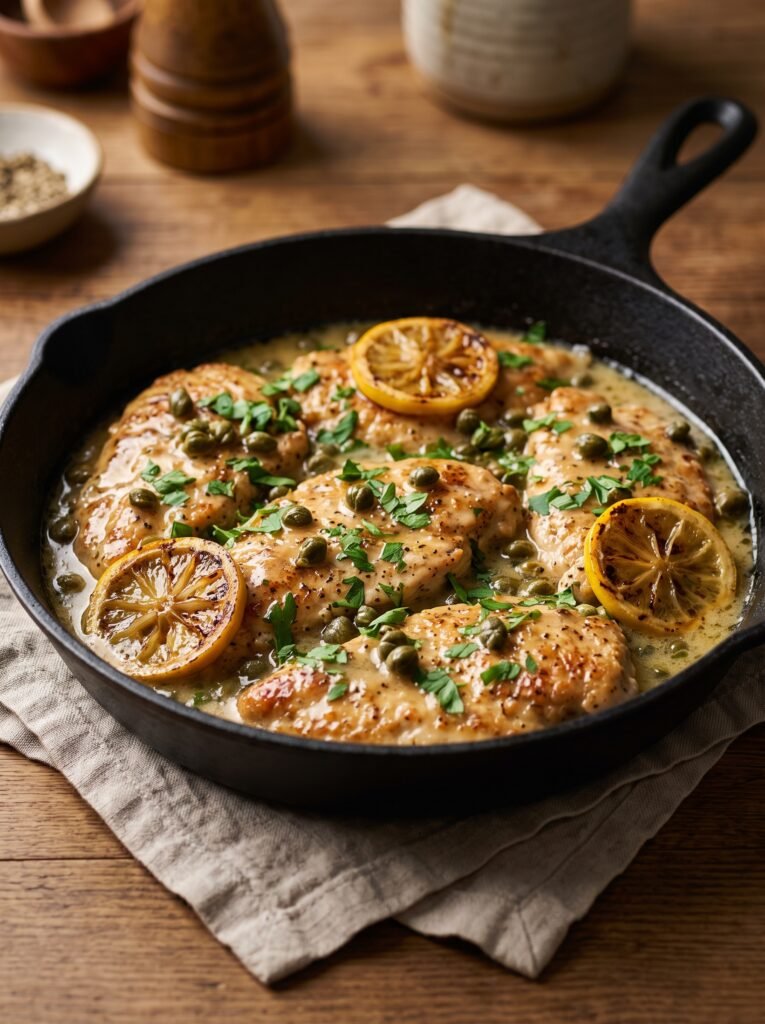
Part 1: Why Creamy Lemon Chicken Piccata Is the Ultimate Heart-Healthy Dinner
The Perfect Balance of Lean Protein, Citrus Acidity, and Briny Capers
Classic culinary design relies on balancing heavy proteins with sharp acidic accents, and this Creamy Lemon Chicken Piccata achieves that equilibrium masterfully. Tender chicken cutlets provide an exceptionally lean, complete protein base that supports muscle maintenance and metabolic stability. Freshly squeezed lemon juice introduces citric acid, which cuts through the velvety sauce while enhancing mineral absorption. Briny, fermented capers deliver a distinct burst of micro-nutrients and salty contrast without requiring excessive table salt. Every bite of this Creamy Lemon Chicken Piccata delivers a clean, revitalizing profile that satisfies dinner cravings without overwhelming your system.
Digestive Comfort and Joint-Friendly Ingredients
Maintaining digestive comfort and joint mobility is a fundamental priority for long-term vitality. Heavy cream sauces and deep-fried coatings can trigger sluggish digestion and systemic inflammation. This modernized Creamy Lemon Chicken Piccata swaps dense roux bases for mineral-dense chicken bone broth naturally packed with bioavailable collagen and amino acids like glycine, which support gut lining integrity and joint cartilage. The inclusion of freshly crushed garlic releases active allicin compounds known to support arterial flexibility, while high-polyphenol extra virgin olive oil delivers joint-soothing oleocanthal. Enjoying this nourishing Creamy Lemon Chicken Piccata guarantees you feel energized, satisfied, and comfortable throughout the evening.
A Rapid 20-Minute Weeknight Skillet Solution
Weeknight dinners must remain approachable and efficient, preventing culinary burnout after demanding days. This Creamy Lemon Chicken Piccata requires just one skillet and cooks in roughly twenty minutes from start to finish. Because the poultry cutlets are sliced thinly, they cook swiftly and evenly without losing moisture, minimizing kitchen cleanup and hands-on preparation. Whether hosting friends or preparing a wholesome family supper, this reliable Creamy Lemon Chicken Piccata streamlines your evening workflow while delivering an upscale, vibrant presentation.
Part 2: Essential Ingredients and the Science of the Skillet
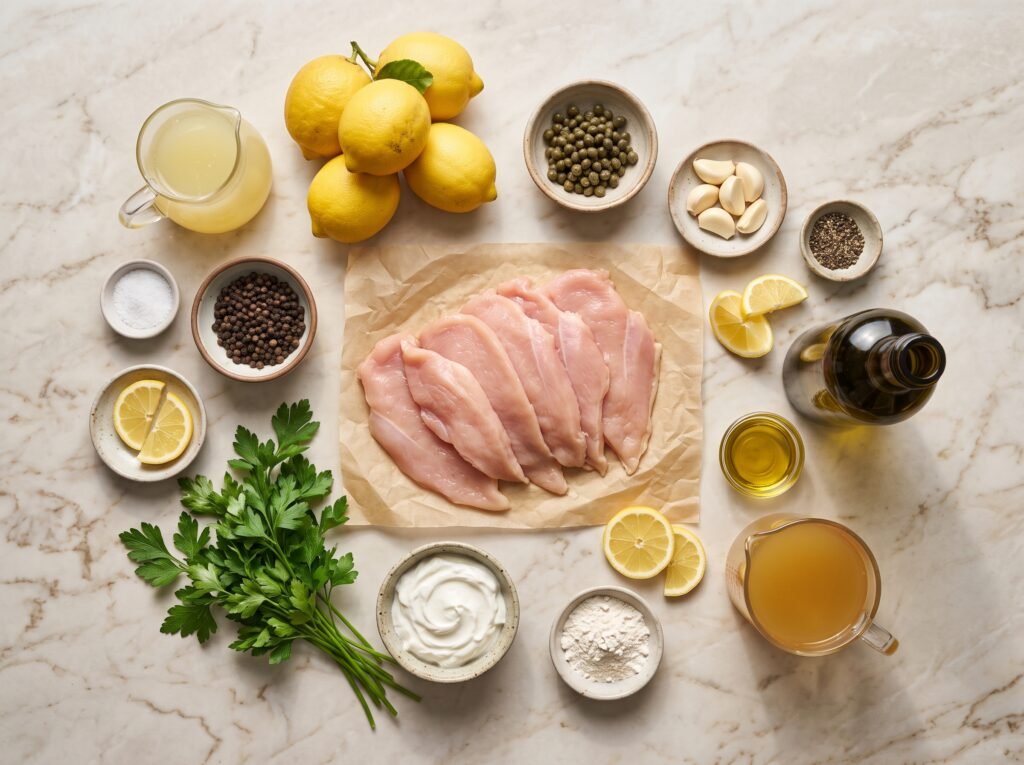
Ingredients for the Tender Chicken Cutlets
For the poultry foundation, I use:
600 g boneless, skinless chicken breast cutlets, butterflied and pounded to ¼-inch thickness
2 tablespoons arrowroot powder or non-GMO cornstarch (for a light, gluten-free dust)
½ teaspoon fine sea salt
½ teaspoon freshly cracked black pepper
2 tablespoons extra virgin olive oil (divided for high-antioxidant searing)
I strictly recommend butterflying and pounding chicken breasts to an even quarter-inch thickness before cooking. Thin cutlets cook rapidly in under three minutes per side, preserving intracellular moisture and preventing the tough, stringy texture common in thick, overcooked breasts. Lightly dusting the cutlets in arrowroot powder rather than heavy all-purpose wheat flour creates a delicate, golden crust that seals in juices while remaining naturally gluten-free and light on digestion.
Ingredients for the Velvety Lemon Piccata Pan Sauce
For the silky pan reduction, I use:
180 ml low-sodium organic chicken bone broth
60 ml fresh lemon juice (strained, from approximately 2 large ripe lemons)
3 tablespoons briny non-pareil capers, rinsed and drained
4 cloves fresh garlic, finely grated or pressed
60 ml unsweetened plain Greek yogurt (or organic light heavy cream, at room temperature)
1 tablespoon cold unsalted grass-fed butter (optional, for a glossy restaurant emulsion)
1 organic lemon, thinly sliced into rounds (for pan caramelization)
Using freshly squeezed lemon juice is paramount; bottled juices possess metallic preservatives that create an acrid, bitter aftertaste in your Creamy Lemon Chicken Piccata. Rinsing your capers in cold water moderates surface sodium while retaining their delightful pickled crunch. Bringing your Greek yogurt or cream to ambient room temperature before stirring it into the warm broth prevents thermal shock and unsightly curdling.
Ingredients for Plating and Fresh Botanical Garnishes
For the vibrant finishing elements, I use:
¼ cup fresh flat-leaf Italian parsley, finely chopped
1 teaspoon fresh lemon zest (grated before juicing)
1 pinch flaky sea salt
Fresh Italian flat-leaf parsley is not merely a visual embellishment; its raw chlorophyll and natural botanical enzymes act as a digestive aid and palate cleanser against the tangy sauce. A gentle sprinkle of fresh zest just before serving releases volatile citrus oils that perfume the entire Creamy Lemon Chicken Piccata.
Part 3: Step-by-Step Guide to Cooking Your Skillet Dinner
Step 1: Pounding and Lightly Dredging the Chicken
Achieving uniform tenderness begins with proper physical preparation. Place the butterflied chicken cutlets between two sheets of parchment paper. Using the flat face of a kitchen mallet or a heavy rolling pin, gently pound the poultry outward from the center until it reaches an even thickness. Season both sides with sea salt and cracked black pepper. Lightly dust each piece with arrowroot powder, shaking off any excess. This thin barrier ensures rapid surface browning without creating a soggy coating in your Creamy Lemon Chicken Piccata.
Step 2: Searing to Golden Perfection in Olive Oil
Heat a wide, heavy-bottomed stainless steel or enameled cast-iron skillet over medium-high heat. Add one tablespoon of olive oil. Once the oil shimmers gently across the surface, place the cutlets in the skillet in a single, uncrowded layer. Sear undisturbed for two to three minutes until a golden crust develops. Flip once and cook the reverse side for two minutes more. Transfer the golden cutlets onto a clean plate and loosely tent with foil to rest; they will finish cooking gently later in the sauce of your Creamy Lemon Chicken Piccata.
Step 3: Sautéing Aromatics and Deglazing the Pan
Reduce the burner heat to medium. Add the remaining teaspoon of olive oil to the pan along with the grated garlic and lemon slices. Sauté for sixty seconds until fragrant, taking care not to burn the garlic. Pour in the chicken bone broth and fresh lemon juice, using a wooden spoon to scrape up all the savory browned fond adhered to the skillet bottom. Stir in the drained capers. Allow the liquid to simmer gently for three to four minutes until it reduces by one-third, concentrating the savory citrus foundation of your Creamy Lemon Chicken Piccata.
Step 4: Emulsifying the Sauce and Gentle Simmer
Lower the heat to low. Gently whisk in the room-temperature Greek yogurt or cream along with the cold butter, swirling continuously until the dairy integrates into a silken, pale-yellow emulsion. Slide the rested chicken cutlets and any accumulated plate juices back into the skillet. Spoon the warm, velvety sauce generously over the meat, letting it simmer gently for two minutes until heated through and the internal temperature reaches 165°F (74°C). Scatter the chopped parsley, fresh lemon zest, and flaky salt over your completed Creamy Lemon Chicken Piccata and serve immediately.
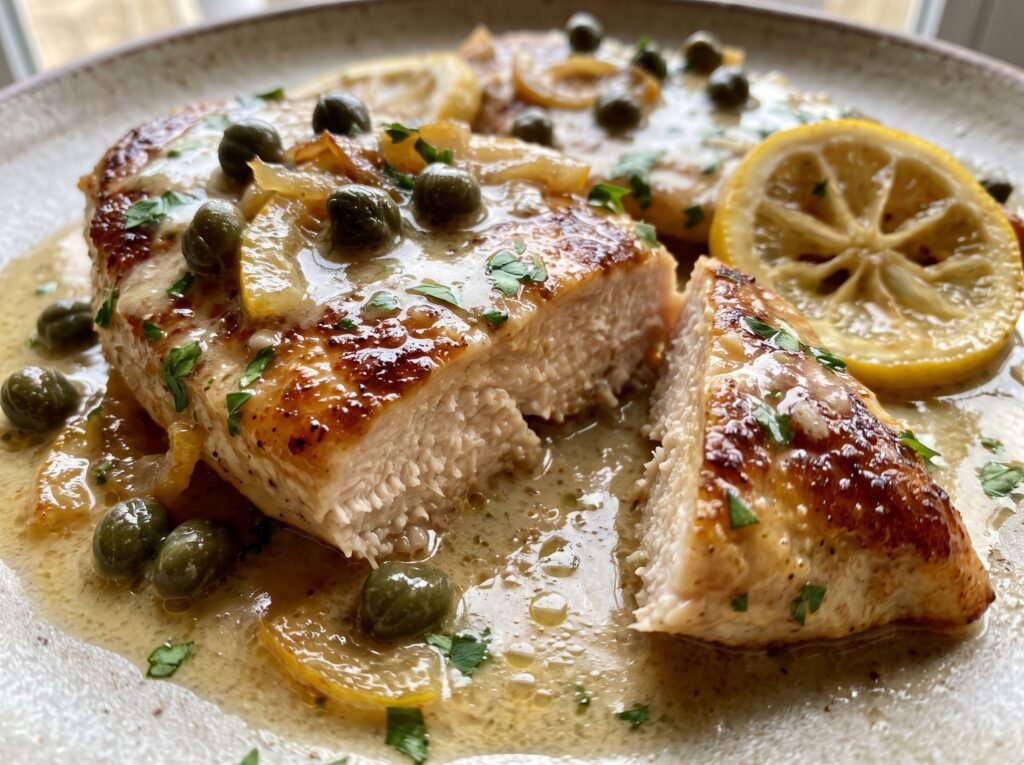
Part 4: Make-Ahead & Meal Prep Instructions for Stress-Free Dinners
Storing Leftover Chicken and Sauce Safely
Proper refrigeration preserves the succulent texture and delicate sauce consistency of your Creamy Lemon Chicken Piccata. Allow leftovers to cool to room temperature within forty-five minutes before transferring the cutlets and pan sauce into an airtight glass storage container. Stored in the main compartment of your refrigerator at or below 38°F (3°C), this Creamy Lemon Chicken Piccata maintains peak flavor and food safety for up to three full days.
Reheating Techniques Without Overcooking Poultry
Reheating delicate chicken cutlets requires gentle thermal application to prevent the lean meat from becoming rubbery. Avoid high-power microwave cycles. Instead, place the chicken cutlets and sauce into a small skillet over low heat on the stovetop. Add one to two tablespoons of chicken broth or water to replenish moisture lost during refrigeration. Cover with a lid and warm gently for four to five minutes, turning the meat once, until heated through. This low-temperature method protects the tender poultry fibers and preserves the silken texture of your Creamy Lemon Chicken Piccata.
Safe Freezing and Defrosting Guidelines
While cooked chicken breasts freeze reliably, pan sauces enriched with yogurt or cream require careful attention. If planning long-term meal prep, freeze the seared chicken cutlets separately from the sauce in freezer-safe vacuum bags for up to two months. Freezing completed Creamy Lemon Chicken Piccata with its dairy sauce may cause slight emulsion separation upon thawing. If frozen together, thaw overnight in the refrigerator and whisk vigorously over gentle heat with a splash of warm broth to recombine the sauce.
Part 5: Delicious Recipe Variations & Dietary Adaptations
The Dairy-Free Adaptation: Rich Cashew Cream or Extra Virgin Olive Oil
Accommodating a strict dairy-free regimen while preserving velvety texture is remarkably straightforward with this Creamy Lemon Chicken Piccata. Simply substitute the Greek yogurt with equal parts homemade blended cashew cream (soaked raw cashews blended smooth with water and lemon juice) or unsweetened full-fat coconut cream. Alternatively, omit dairy entirely and emulsify two tablespoons of cold extra virgin olive oil into the warm lemon broth off the heat. This variation yields an authentic Mediterranean piccata that remains entirely dairy-free and gentle on digestion.
Low-Carb & Keto Pairings: Zucchini Noodles and Riced Cauliflower
For those prioritizing low-glycemic eating or managing blood glucose stability, pairing your Creamy Lemon Chicken Piccata with the right sides is essential. Rather than serving over traditional semolina pasta, ladle the tender cutlets and lemony caper sauce over a warm bed of sautéed zucchini spirals (zoodles) or steamed riced cauliflower. The mild vegetable bases soak up the savory citrus sauce beautifully, providing abundant dietary fiber while keeping net carbohydrates low.
Exploring Alternative Proteins: Seared Salmon or Plump Shrimp
The vibrant lemon-caper pan sauce serves as an exceptional companion for delicate seafood. Thick wild salmon fillets or peeled wild-caught shrimp sear beautifully in the skillet, pairing effortlessly with the tangy reduction. Searing wild salmon in place of poultry infuses substantial heart-healthy omega-3 fatty acids, transforming this Creamy Lemon Chicken Piccata concept into an elegant seafood centerpiece.
Part 6: Pro-Chef Tips for a Flawless Skillet Presentation
Pounding for Even Surface Heat Transfer
Uniformity in thickness is the single most critical factor in restaurant-caliber poultry cookery. Irregular chicken cutlets cook unevenly; the tapered ends overcook into dry leather before the thick center reaches a safe temperature. Taking sixty seconds to gently pound the meat to an even ¼-inch thickness guarantees rapid, synchronized cooking. This simple step ensures every forkful of your Creamy Lemon Chicken Piccata remains meltingly tender.
Deglazing the Skillet to Capture Savory Fond
The golden, caramelized bits of browned protein that stick to the skillet after searing the chicken are pure culinary gold, known culinarily as fond. Never scrub or discard these remnants. Pouring cold bone broth and lemon juice into the hot pan instantly dissolves these concentrated sugars and amino acids into the liquid. Incorporating this natural umami foundation into your reduction gives your Creamy Lemon Chicken Piccata deep, complex flavor that cannot be replicated with broth alone.
Controlling Heat to Prevent Dairy Curdling
Adding dairy products to an acidic, simmering pan sauce requires thermal mindfulness. The combination of intense heat and citric acid can cause milk proteins to denature and separate into grainy flecks. To guarantee a glossy, restaurant-grade finish on your Creamy Lemon Chicken Piccata, always turn the burner down to low or pull the skillet off the heat entirely before swirling in your room-temperature yogurt or cream.
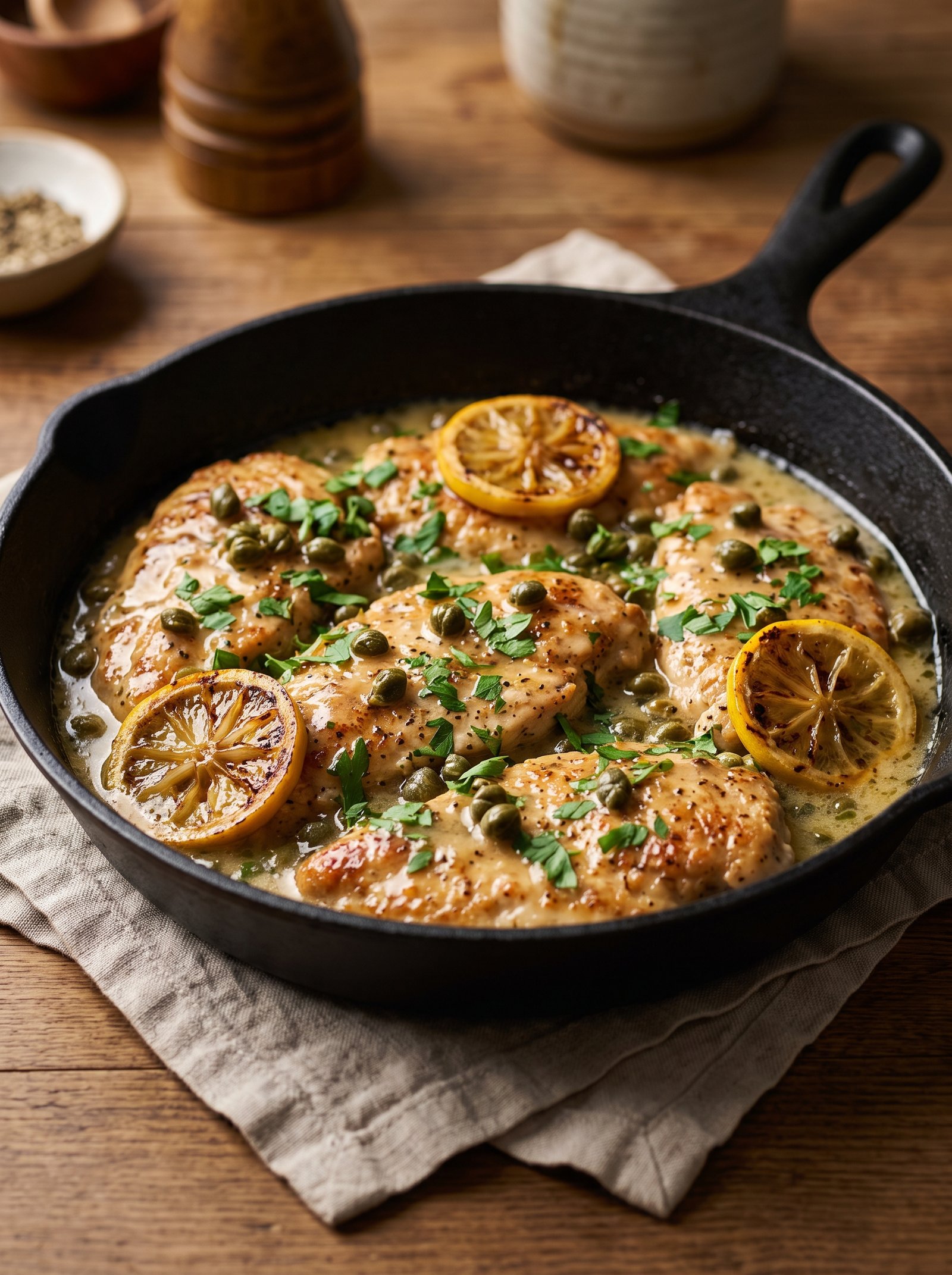
Creamy Lemon Chicken Piccata
Ingredients
Method
- Prep the cutlets: Season the pounded chicken cutlets evenly on both sides with sea salt and black pepper. Lightly dust with arrowroot powder, shaking off any excess.
- Sear the poultry: Heat 1 tablespoon of olive oil in a large skillet over medium-high heat. Sear the cutlets in an uncrowded single layer for 2 to 3 minutes per side until golden brown. Transfer to a clean plate.
- Sauté and deglaze: Reduce heat to medium. Add the remaining olive oil, minced garlic, and lemon slices. Sauté for 60 seconds until fragrant. Pour in the bone broth and lemon juice, scraping up the browned pan drippings. Stir in the drained capers and simmer for 3 minutes to reduce slightly.
- Finish the sauce: Lower heat to low. Whisk in the room-temperature Greek yogurt and cold butter until silky and emulsified. Return the seared cutlets and juices to the pan, simmering gently for 2 minutes until heated through (74°C/165°F). Garnish with parsley and lemon zest, and serve immediately.
Notes
- Pound cutlets to a uniform thickness so they cook quickly without drying out.
- Rinse capers under cold water to control saltiness without losing their signature tang.
-
Keep Greek yogurt at room temperature before adding to prevent the sauce from separating.Swirl in your cold butter and yogurt off the direct heat to achieve a smooth, restaurant-grade emulsion that never curdles.
F&Q
Can I make Creamy Lemon Chicken Piccata without capers?
Yes. If you dislike capers or need to reduce sodium further, you can substitute them with finely chopped pitted green olives (such as Castelvetrano) for a milder briny flavor. Alternatively, use fresh artichoke hearts or simply finish the dish with extra fresh lemon zest and Italian parsley for a clean citrus profile.
How do I prevent the lemon sauce from tasting too bitter?
Bitterness in lemon pan sauces stems from two mistakes: cooking raw lemon seeds/white pith for too long, or using bottled lemon juice. Always use fresh lemons, strain out the seeds, and add the fresh juice during the deglazing phase. If your sauce ever tastes overly sharp, whisk in a teaspoon of pure honey or an extra splash of bone broth to balance the acidity.
What side dishes pair best with Creamy Lemon Chicken Piccata?
This versatile Creamy Lemon Chicken Piccata pairs wonderfully with roasted asparagus, steamed broccolini, crisp green beans, or a light arugula salad tossed in olive oil. For satisfying complex carbohydrates, serve it alongside roasted baby red potatoes, steamed quinoa, or gluten-free penne.
Disclaimer:
The culinary and nutritional information provided in this article is strictly for educational and informational purposes only. It does not constitute professional medical advice, diagnosis, or treatment. While I strive to provide accurate macronutrient insights and dietary substitution recommendations, these should not replace consultations with qualified healthcare professionals or registered dietitians. Always consult your physician before making significant changes to your diet, especially if you manage specific cardiovascular, metabolic, or digestive conditions. Any claims regarding heart health, anti-inflammatory benefits, or digestive comfort are substantiated by general culinary science but are not intended as clinical guidelines.