
Few culinary creations achieve the electric textural contrast of a traditional Vietnamese sandwich, yet dense baguettes rarely align with an active, mid-day fitness routine. During long afternoons of back-to-back work demands and afternoon training sessions, heavy refined flour invariably leads to brain fog and an energy dip. I craved the vibrant, savory-sweet punch of lemongrass glazed poultry and the crisp, probiotic snap of pickled root vegetables, but in a format engineered for prolonged metabolic stamina.
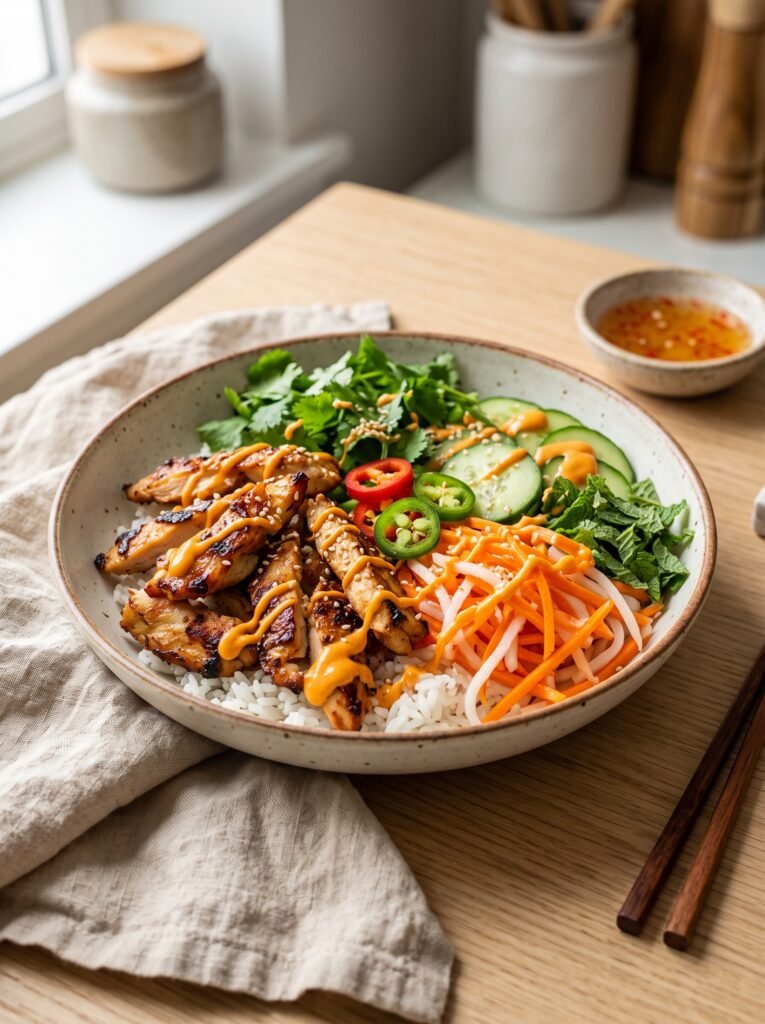
By deconstructing this street-food staple into nutrient-dense Chicken Bánh Mì Bowls—layering lean charred poultry over a bed of warm jasmine rice, cooling herbs, and crisp daikon—we retain every ounce of culinary soul while tailoring the meal for clean nutrition. Today, I am sharing the exact culinary protocol behind these Chicken Bánh Mì Bowls, guaranteed to redefine your weekly lunch meal prep.
The Ultimate Chicken Bánh Mì Bowls (5 Easy Steps)
Part 1: Why Chicken Bánh Mì Bowls Are the Ultimate High-Protein Lunch
The Balance of Savory Protein, Acidic Crunch, and Fresh Herbs
Traditional Vietnamese cuisine is celebrated worldwide for its philosophical reliance on the five fundamental taste elements: spicy, sour, bitter, salty, and sweet. These Chicken Bánh Mì Bowls embody that ancient balance through modern whole-food ingredients. The tender, caramelized poultry provides a rich savory profile anchored in garlic and fish sauce. Counterbalancing this richness are crisp, quick-pickled root vegetables saturated in raw vinegar that awaken the taste receptors. Fresh sprigs of mint, cilantro, and cooling cucumber cut through the savory lipids, ensuring your palate never experiences sensory fatigue. This delicate dynamic elevates these Chicken Bánh Mì Bowls into a restaurant-caliber lunch.
Engineered for Clean Fuel and Steady Metabolic Energy
Mid-day nourishment must act as clean metabolic fuel rather than a caloric burden that hampers afternoon productivity. Conventional sandwich baguettes provoke rapid glucose spikes followed by sharp insulin crashes. Transitioning the concept into Chicken Bánh Mì Bowls allows you to tailor your complex carbohydrate matrix with precision. Pairing bioavailable lean chicken breast or thighs with steamed jasmine rice or fiber-rich cauliflower rice ensures sustained glycogen replenishment. The abundance of raw botanicals in these Chicken Bánh Mì Bowls delivers digestive enzymes, leaving you energized, light, and mentally sharp for the rest of your workday.
Gut-Friendly Acidity and Prebiotic Vegetable Fibers
Digestive optimization sits at the core of conscious culinary formulation. By incorporating freshly shredded daikon radish and sweet carrots, these Chicken Bánh Mì Bowls provide high concentrations of soluble and insoluble prebiotic plant fibers. When these vegetables undergo a rapid vinegar-steeping process, the natural acids enhance gastrointestinal enzyme production, priming your digestive tract for efficient protein breakdown. Furthermore, daikon radish contains natural enzymes that actively support gut motility. Consuming nutrient-dense Chicken Bánh Mì Bowls regularly fosters a balanced microbiome while banishing post-lunch digestive distention.
Part 2: Essential Ingredients and the Science of the Components
Ingredients for the Lemongrass Marinated Chicken
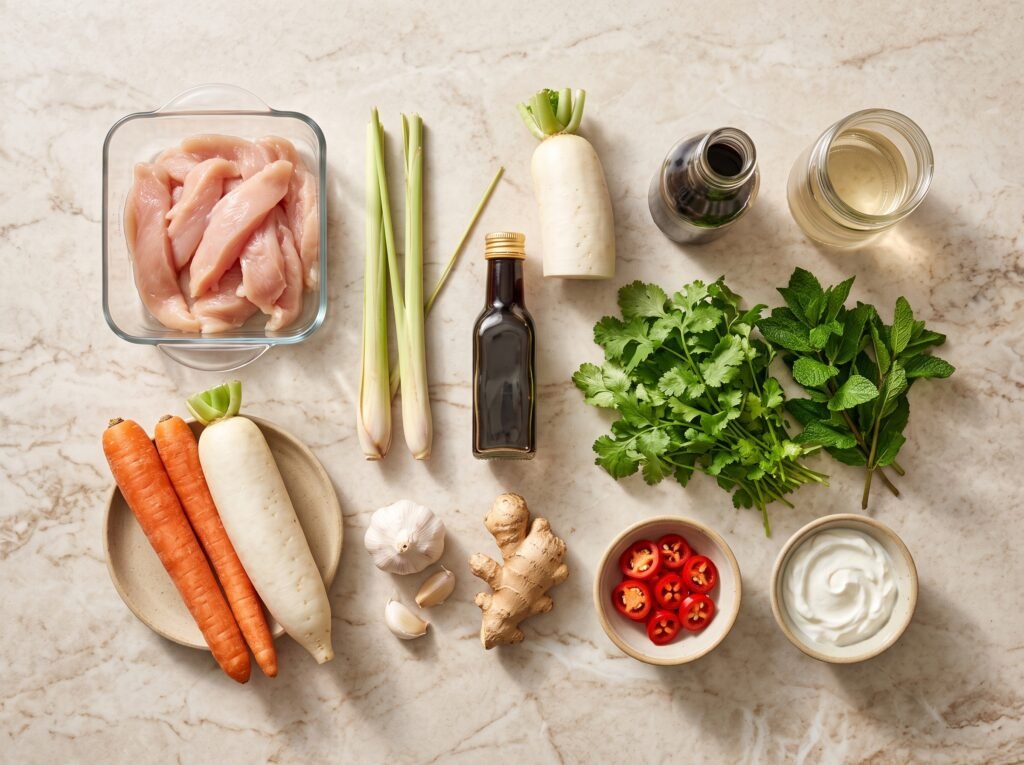
For the savory chicken base, I use:
500 g boneless, skinless chicken thighs or chicken breast, cut into thin bite-sized strips
2 stalks fresh lemongrass, pale white tender core only, bruised and finely minced
3 tablespoons gluten-free tamari or low-sodium soy sauce
1 tablespoon high-quality fish sauce
1 ½ tablespoons pure maple syrup or honey
1 tablespoon pure toasted sesame oil
4 cloves garlic, finely minced
1 teaspoon fresh ginger root, grated
1 teaspoon avocado oil (for high-heat skillet searing)
I always recommend boneless skinless chicken thighs for this preparation because their natural intracellular fat profile yields the juiciest bite and tolerates intense skillet heat without drying out. If you prefer lean chicken breast for fitness macros, ensure you slice the meat uniformly so it cooks through in just a few minutes. Bruising the lemongrass with the flat edge of your knife before mincing is non-negotiable; this mechanical action breaks the plant cell walls, releasing the fragrant citrus oils directly into the poultry.
Ingredients for the Quick-Pickled Carrot and Daikon Slaw (Đồ Chua)
For the crisp pickled vegetables, I use:
1 large fresh carrot, peeled and cut into matchsticks (about 150 g)
1 medium daikon radish, peeled and cut into matchsticks (about 200 g)
120 ml unseasoned rice vinegar
120 ml warm water
1 teaspoon fine sea salt
1 tablespoon honey or organic granulated sugar
I prefer pairing sweet orange carrots with traditional white daikon radish because daikon delivers a clean, mild crunch that absorbs acidity much better than peppery red radishes. Tossing the julienned roots in a pinch of salt draws out excess water, ensuring your pickles remain delightfully crunchy rather than turning soggy once submerged in the warm vinegar brine.
Ingredients for the Bowl Scaffolding and Fresh Botanicals
For assembling the bowl foundation, I use:
3 cups steamed jasmine rice (or 3 cups lightly sautéed cauliflower rice for low-carb)
2 cups fresh romaine lettuce or baby spinach, finely shredded
1 medium English cucumber, thinly sliced into half-moons
1 fresh jalapeño, sliced into thin rings
1 generous bunch fresh cilantro, coarse stems trimmed
½ cup fresh mint leaves, roughly torn
1 tablespoon toasted white sesame seeds
Using half warm jasmine rice and half crisp shredded greens gives you the ultimate balance of comfort and volume without leaving you feeling sluggish in the middle of the day. English cucumbers are ideal here because their thin skin and small seed core prevent watery buildup in your bowl.
Ingredients for the Spicy Sriracha-Yogurt Drizzle
For the creamy finishing sauce, I use 120 g plain whole-milk Greek yogurt, 2 tablespoons sriracha chili sauce, 1 tablespoon fresh lime juice, and a pinch of fine sea salt. Whisking sriracha directly into thick Greek yogurt replicates the velvety mouthfeel of traditional bánh mì mayonnaise while adding gut-friendly probiotics, protein, and a vibrant orange hue that ties the entire dish together.
Part 3: Step-by-Step Guide to Assembling Your Chicken Bánh Mì Bowls
Step 1: Marinating the Poultry for Maximum Flavor Infusion
Achieving deep flavor saturation requires adequate surface contact. Begin by slicing the chicken into uniform strips approximately one-quarter inch thick. In a wide glass bowl, whisk together the minced lemongrass, tamari, fish sauce, maple syrup, minced garlic, grated ginger, and sesame oil. Submerge the poultry entirely, massaging the marinade into the meat fibers. Allow it to rest at room temperature for fifteen minutes, or refrigerate for up to twelve hours for your Chicken Bánh Mì Bowls.
Step 2: Preparing the Quick-Pickled Carrot and Daikon Slaw
While the poultry marinates, prepare the essential acidic component for your Chicken Bánh Mì Bowls. Using a sharp mandoline or julienne peeler, cut one large peeled carrot and an equal volume of daikon radish into matchsticks. In a glass jar, combine hot water, rice vinegar, sea salt, and honey. Submerge the vegetables completely in the brine. Within fifteen minutes, the osmotic exchange yields crunchy, sour ribbons that remain fresh in the refrigerator for weeks.
Step 3: High-Heat Searing for Authentic Street-Food Char
Replicating the charred flavor of street food grills requires intense direct heat. Heat a cast-iron skillet over medium-high heat with a splash of avocado oil. Lay the marinated chicken strips in a single, uncrowded layer. Allow the poultry to sear undisturbed for three to four minutes to develop deep Maillard caramelization. Flip each piece once and cook for two to three minutes more until fully cooked through. This deliberate technique produces the signature mahogany exterior demanded by authentic Chicken Bánh Mì Bowls.
Step 4: Building the Nutritional Base with Rice and Crisp Greens
A well-constructed lunch bowl relies on deliberate temperature contrasts and architectural layering. Divide warm jasmine rice or cooked brown rice among your serving containers. To increase fiber and volume without surplus carbohydrates, fill half of each dish with crisp shredded romaine lettuce or baby spinach. This structural foundation ensures every forkful of your Chicken Bánh Mì Bowls captures both warm, grounding grains and cool, refreshing greenery.
Step 5: Final Layering, Garnishing, and Sauce Emulsion
The culmination of this assembly is a study in vibrant culinary aesthetics. Arrange the caramelized chicken neatly atop one quadrant of your base. Adjacent to the warm poultry, add a tangle of drained pickled vegetables, sliced English cucumber, and fresh jalapeño rounds. Scatter fresh cilantro sprigs and torn mint leaves over top. To complete your Chicken Bánh Mì Bowls, generously drizzle the sriracha Greek yogurt sauce across the surface and garnish with toasted sesame seeds.
Part 4: Make-Ahead & Meal Prep Instructions for the Workweek
How to Batch-Prep 4 Days of Healthy Lunches
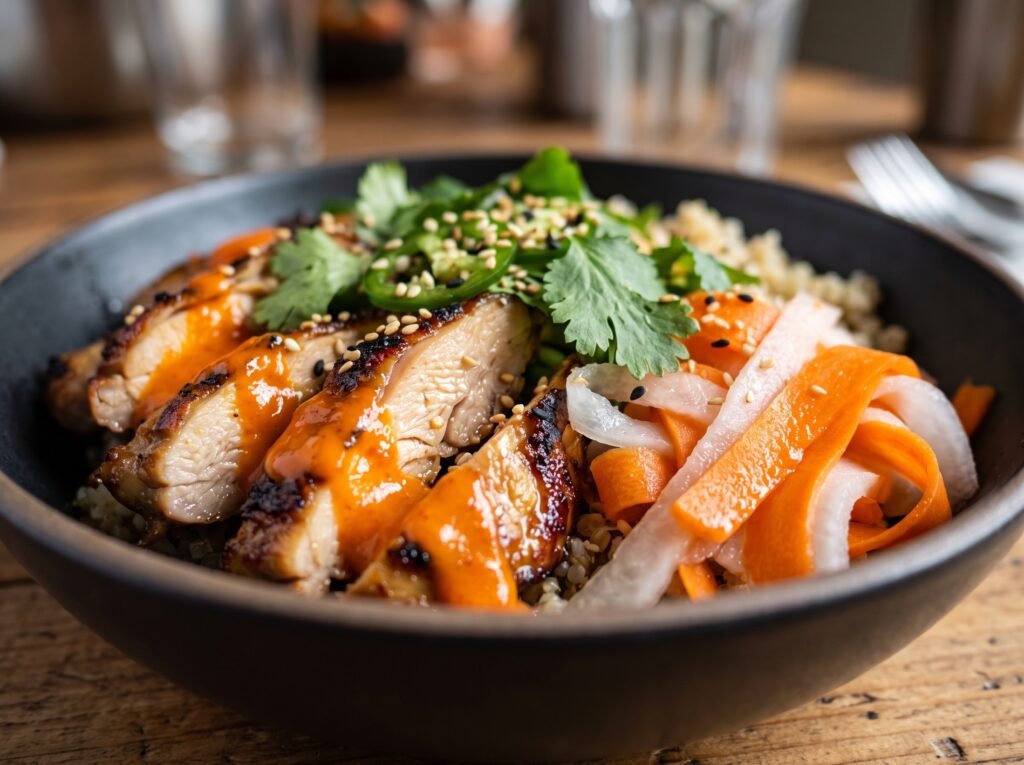
Executing a seamless weekday lunch strategy requires organizing your workflow into modular components. These Chicken Bánh Mì Bowls are extraordinarily resilient, making them ideal for Sunday batch-cooking. Cook a double portion of lemongrass chicken and steam a pot of rice, letting both cool completely before packaging. Store the sliced cooked chicken, portions of rice, and jars of pickled vegetables in separate glass containers. Keeping components segregated preserves textures so every serving of your Chicken Bánh Mì Bowls tastes freshly prepared.
Keeping Herbs and Pickled Veggies Crisp and Fresh
The primary pitfall in meal-prepping fresh salad bowls is premature botanical wilting. When packing individual grab-and-go containers for work, place the rice and chicken on the bottom, reserving a corner for the drained pickles. Always store fresh cilantro, mint, and sliced jalapeños in a separate small container or wrapped in a dry paper towel. Keeping herbs dry prevents pickling moisture from making your Chicken Bánh Mì Bowls soggy before lunchtime.
Reheating Techniques: Cold Assembly vs. Warm Rice & Chicken
One of the greatest culinary advantages of Chicken Bánh Mì Bowls is their dynamic temperature flexibility. Many fitness enthusiasts enjoy consuming the bowl completely chilled during warm afternoons as a substantial salad. If you prefer the contrast of hot meat and cool toppings, set aside the raw cucumbers and herbs, and microwave the chicken and rice for sixty seconds. Top with the cool pickled slaw, fresh herbs, and chilled spicy sauce for the ultimate Chicken Bánh Mì Bowls experience.
Part 5: Delicious Recipe Variations & Dietary Adaptations
Low-Carb & Keto Adaptations: Swapping Cauliflower Rice and Edamame
Adhering to a ketogenic regimen requires eliminating high-starch grains without losing structural volume. For a keto-compliant version of these Chicken Bánh Mì Bowls, substitute jasmine rice with riced cauliflower lightly sautéed in sesame oil with garlic. The tender cauliflower absorbs the savory pan drippings flawlessly. Supplement the bowl with steamed edamame pods to infuse plant protein and dietary fiber while keeping net carbohydrates low.
The Seafood Alternative: Glazed Salmon or Plump Lemongrass Shrimp
While poultry is the classic choice, this vibrant marinade pairs wonderfully with omega-3-packed marine proteins. Cubed wild salmon or peeled shrimp absorb the lemongrass and tamari blend in ten minutes. Searing seafood over high heat produces snappy, caramelized bites that transform these Chicken Bánh Mì Bowls into an elegant, pescatarian-friendly culinary centerpiece.
Plant-Based & Vegan Adaptations: Crispy Baked Tofu
Transitioning this recipe into a plant-based powerhouse is effortless with extra-firm organic tofu. Press out all excess moisture with a clean towel before slicing into cubes. Toss the tofu in arrowroot powder and the lemongrass marinade, then bake at 400 degrees Fahrenheit for twenty-five minutes. Drizzle with vegan cashew sriracha mayonnaise to keep your plant-based Chicken Bánh Mì Bowls entirely dairy-free.
Part 6: Pro-Chef Tips for Authentic Flavor and Presentation
Bruising Lemongrass: Extracting Essential Aromatic Oils
Lemongrass stalks possess tough exterior fibers that shield their fragrant essential oils. To unlock their full aroma before mincing, lay the trimmed stalk on a cutting board and strike it firmly with the flat side of a chef’s knife. Once bruised, finely shave the pale lower third of the stalk into thin disks before mincing into fine confetti for your Chicken Bánh Mì Bowls.
The Double-Sear Skillet Method for Intense Caramelization
Overcrowding your skillet with raw marinated chicken causes the meat to release moisture and steam in its juices rather than sear. To achieve that coveted street-food char on your Chicken Bánh Mì Bowls, cook the meat in two uncrowded batches. Ensure your skillet returns to high heat between batches and let the chicken sear undisturbed for the first ninety seconds to develop a deep crust.
Maintaining Temperature Contrast for Maximum Palate Sensation
A lukewarm bowl feels monotonous. The magic of memorable Chicken Bánh Mì Bowls relies on a calculated contrast: hot, savory poultry and warm rice set against ice-cold pickled vegetables, chilled cucumbers, and cool yogurt sauce. Keep your pickled vegetables and dressing chilled in the refrigerator until the second of assembly so every forkful delivers an exhilarating wave of temperature and texture.
Part 7: Storage and Food Safety Instructions
Storing Cooked Poultry and Grains Safely
Proper storage prevents foodborne bacteria and preserves culinary quality. Cooked chicken and steamed jasmine rice must cool within one hour before moving into airtight glass meal-prep containers. Stored in your refrigerator at or below 38 degrees Fahrenheit, components for your Chicken Bánh Mì Bowls remain safe and fresh for up to four full days.
Shelf Life and Care for Homemade Quick Pickles
Because the pickling brine features a low pH derived from acetic acid, these root vegetables naturally resist microbial growth. Stored in a sealed glass mason jar fully submerged in brine, they will stay crunchy and delicious for up to three weeks. Always use a clean utensil to extract pickles so your Chicken Bánh Mì Bowls stay pristine.
Safe Freezing and Defrosting Considerations
Marinated, uncooked chicken strips can be frozen in airtight bags for up to three months; thaw overnight in the refrigerator before searing for fresh Chicken Bánh Mì Bowls. Steamed jasmine rice also freezes well for up to one month. However, never freeze the quick-pickled vegetables, fresh cucumbers, or yogurt sauce, as freezing ruptures vegetable cell walls and causes dairy emulsions to separate.
Chicken Bánh Mì Bowls (With Quick-Pickled Veggies)
Ingredients
Method
- Marinate the chicken: In a wide bowl, whisk the minced lemongrass, tamari, fish sauce, maple syrup, sesame oil, garlic, and ginger. Add the sliced chicken, tossing thoroughly to coat. Marinate at room temperature for 15 minutes, or cover and refrigerate up to 12 hours.
- Make the quick pickles: In a glass jar, dissolve the sea salt and 1 teaspoon of honey into the hot water and rice vinegar. Pack the julienned carrots and daikon into the liquid. Let steep for 15 minutes at room temperature.
- Mix the sauce: In a small bowl, whisk together the Greek yogurt, sriracha, and fresh lime juice until silky and pourable. Set aside.
- Sear the chicken: Heat a heavy skillet or cast-iron pan over medium-high heat with 1 teaspoon of avocado oil. Cook the chicken in a single layer for 3 to 4 minutes without moving to develop a deep char. Flip and cook 2 to 3 minutes more until cooked through (74°C/165°F).
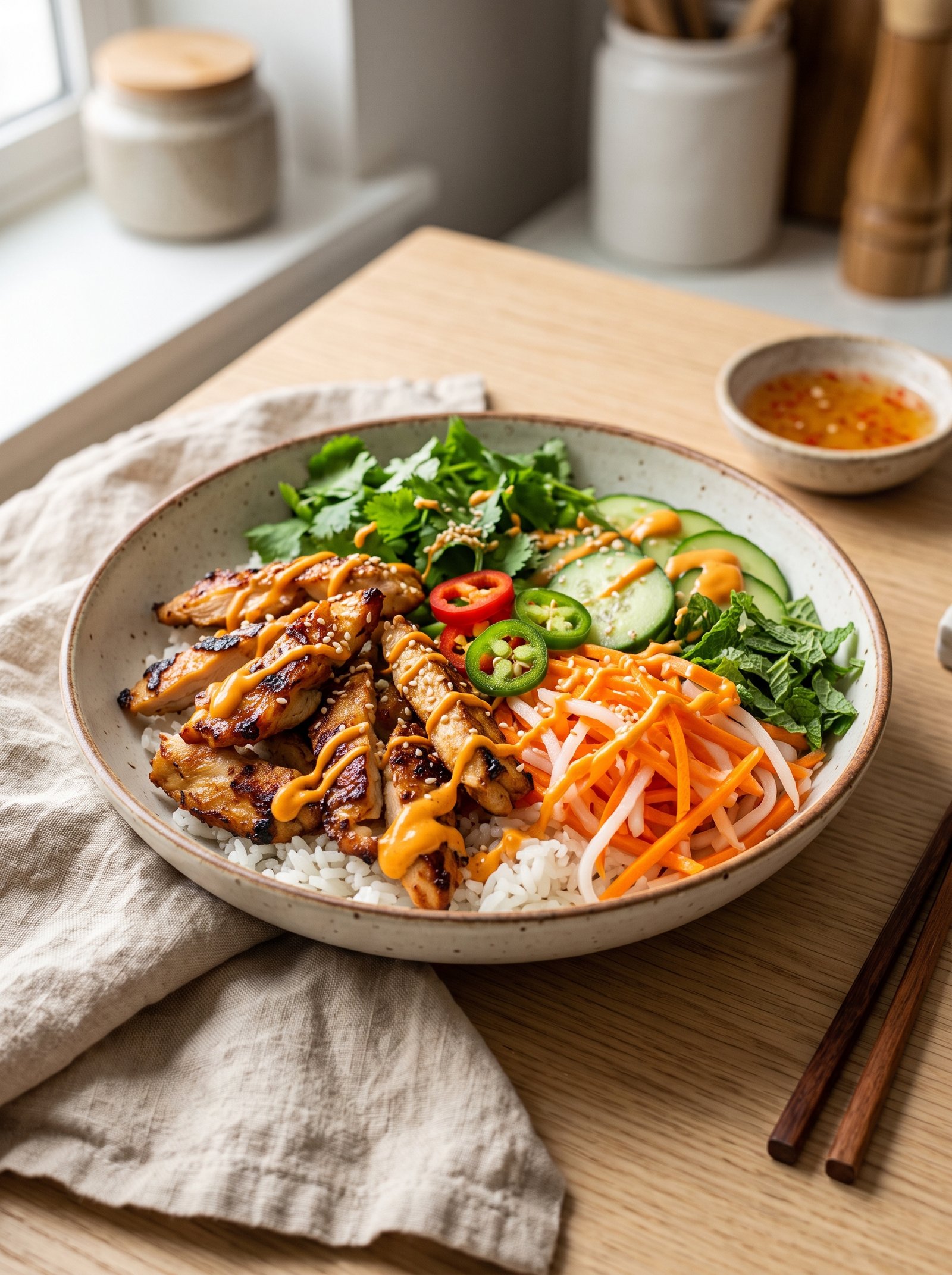
- Assemble the bowls: Divide the cooked jasmine rice among four serving bowls. Top with charred chicken, drained pickled carrots and daikon, sliced cucumber, jalapeños, fresh cilantro, and mint. Drizzle generously with sriracha-yogurt sauce and sprinkle with sesame seeds.
Notes
- Bruise lemongrass stalks firmly with the flat edge of your knife before mincing to release the essential citrus oils.
- Store chicken, rice, pickled slaw, and sauce in separate airtight containers for up to 4 days of meal prep.
-
Swap jasmine rice for cauliflower rice to create an ultra-low-carb, keto-compliant lunch.Never crowd your skillet when searing the chicken. Cooking in two separate batches guarantees authentic street-food caramelization instead of steaming the meat in its juices.
F&Q
What makes Chicken Bánh Mì Bowls healthy?
These Chicken Bánh Mì Bowls are packed with lean protein, gut-supporting dietary fiber, and healthy, non-inflammatory fats. By removing the traditional white flour baguette, we eliminate empty calories and avoid blood sugar spikes. The dish features lean chicken breast or thighs for muscle repair, prebiotic daikon radish and carrots steeped in vinegar to support gut motility, and an upgraded spicy drizzle made with probiotic Greek yogurt rather than calorie-dense seed oil mayonnaise.
What does daikon radish taste like, and can I substitute it?
Daikon radish is a large, mild East Asian root vegetable that is considerably sweeter, juicier, and less peppery than standard small red radishes. When pickled in vinegar, it develops a crisp, refreshing crunch. If you cannot source fresh daikon at your local supermarket, you can easily substitute thinly julienned red radishes, crisp jicama, or simply use an all-carrot slaw for your Chicken Bánh Mì Bowls.
Is fish sauce mandatory in the lemongrass chicken marinade?
Fish sauce provides the authentic, savory umami depth characteristic of authentic Vietnamese cooking. High-grade fish sauces contain only two pure ingredients: wild black anchovies and sea salt. However, if you have a seafood allergy or maintain a strict vegan diet, you can substitute the fish sauce with equal parts dark tamari and a splash of coconut aminos mixed with a pinch of seaweed powder to replicate that deep, oceanic savoriness.
Disclaimer:
The culinary and nutritional information provided in this article is strictly for educational and informational purposes only. It does not constitute professional medical advice, diagnosis, or treatment. While I strive to provide accurate macronutrient insights and dietary substitution recommendations, these should not replace consultations with qualified healthcare professionals or registered dietitians. Always consult your physician before making significant changes to your diet, especially if you manage specific metabolic, digestive, or cardiovascular conditions. Any claims regarding nutritional benefits, prebiotic properties, or gut health are substantiated by general culinary science but are not intended as clinical guidelines.