
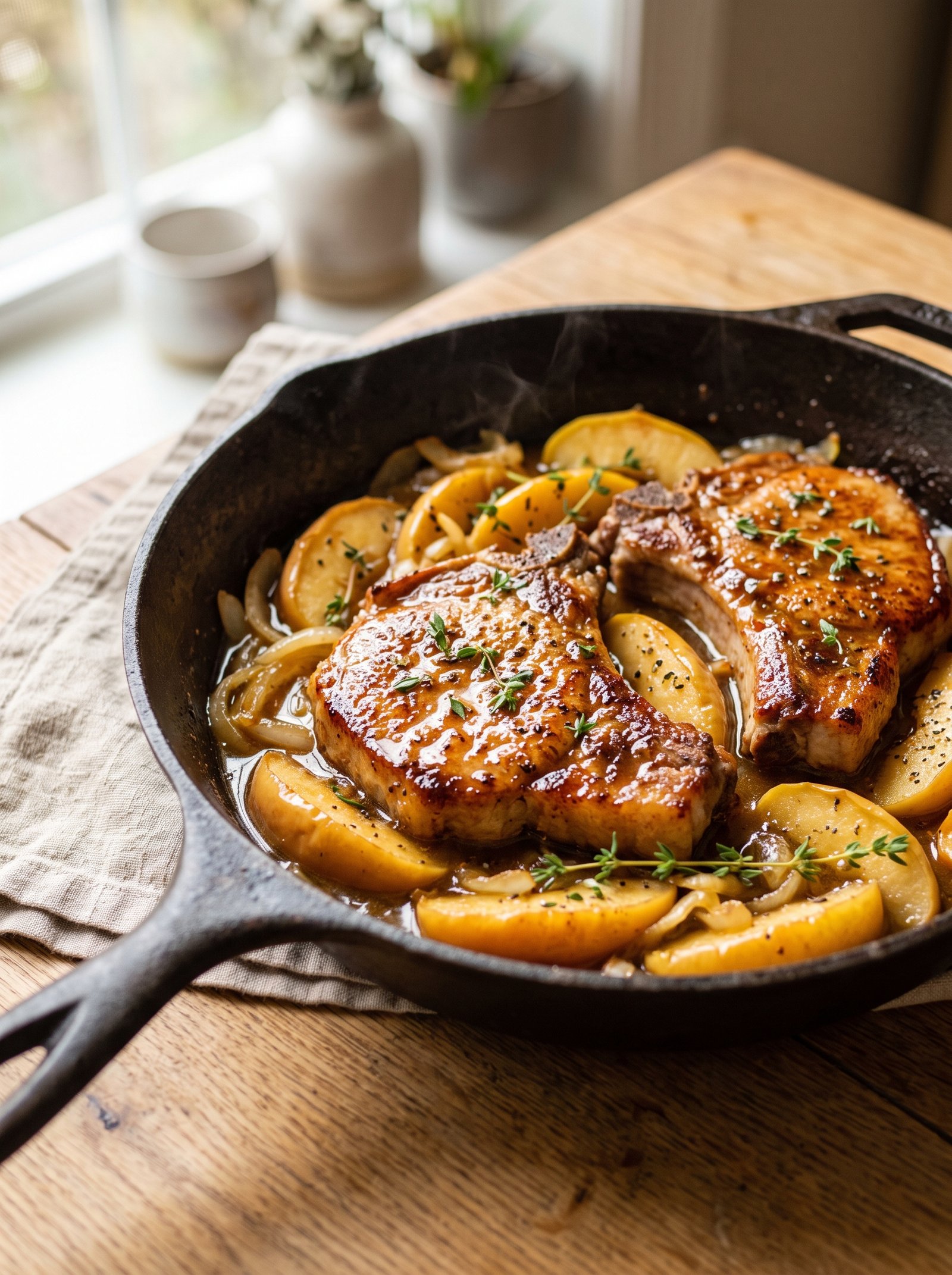
These skillet apple cider pork chops bring together juicy pork, tender apples, and sweet onions in a savory pan sauce. The whole dinner cooks in one skillet, so it feels right for a cool fall evening without leaving you with a sink full of dishes.
I use apple cider for a gentle sweetness, Dijon mustard for balance, and fresh thyme for a savory finish. Serve the pork chops with mashed potatoes, rice, or crusty bread to catch every bit of sauce.
Why You’ll Love These Apple Cider Pork Chops
This is a cozy dinner with familiar ingredients and a simple stovetop method. The apples soften as they cook with the onions, while the cider and chicken broth turn the browned bits in the skillet into a light, savory-sweet sauce.
The recipe also keeps the pork chops and sauce together in one pan. Sear the chops first, make the apple and onion mixture, then return the pork to the skillet to finish cooking. It is a straightforward order that gives each part time to develop flavor.
Choose firm apples that hold their shape, such as Honeycrisp or Granny Smith. Honeycrisp adds a sweeter, mellow flavor, while Granny Smith brings a tart note that contrasts nicely with the cider.
Ingredients for Skillet Apple Cider Pork Chops
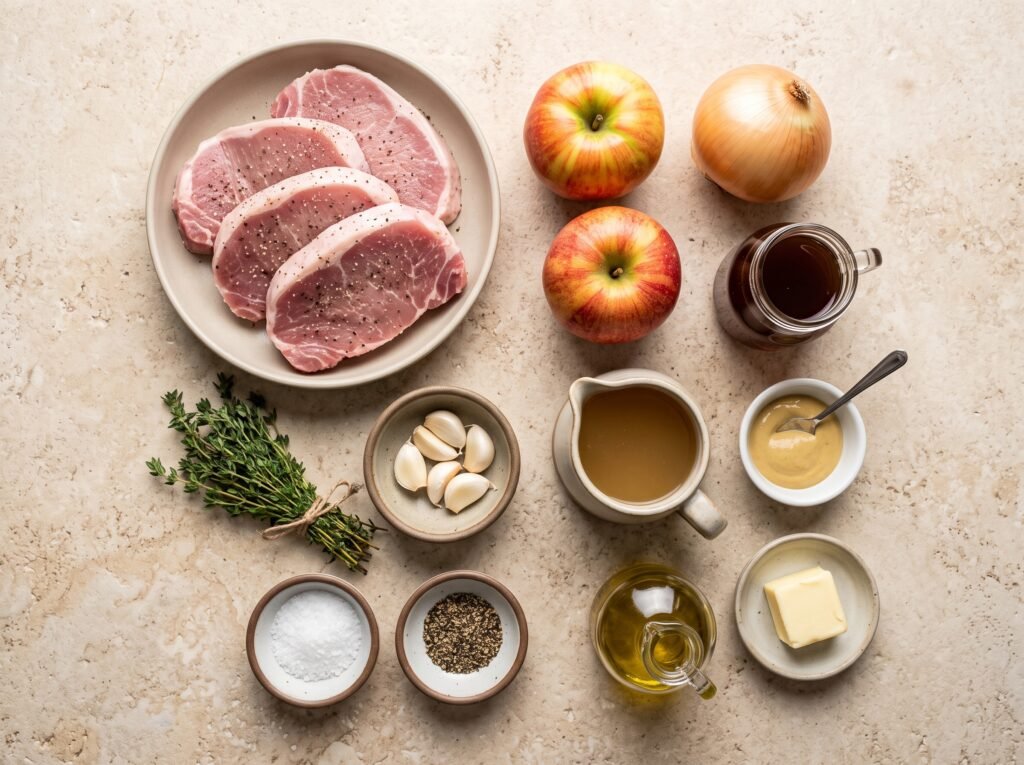
- Pork chops: Use four boneless chops, about 6 ounces each and roughly 1 inch thick. Similar thickness helps them cook at the same pace.
- Apples: Two medium firm apples, cored and sliced into wedges. There is no need to peel them.
- Yellow onion: One medium onion, thinly sliced, gives the pan sauce a savory base.
- Apple cider: Use ½ cup (120 ml) nonalcoholic apple cider, not hard cider. It adds apple flavor without making the sauce too sweet.
- Chicken broth: Use ½ cup (120 ml) broth to balance the cider and loosen the sauce.
- Dijon mustard: One tablespoon adds a little tang and rounds out the sweetness.
- Olive oil and butter: One tablespoon of each helps brown the pork and soften the apples and onion.
- Garlic: Two minced cloves add a savory note.
- Fresh thyme: One teaspoon of leaves, or ½ teaspoon dried thyme, works well here.
- Salt and black pepper: Season the pork before searing, then adjust the sauce to taste.
How to Make Apple Cider Pork Chops
1. Season and sear the pork
Pat the pork chops dry with paper towels. Season both sides with the salt and black pepper. Heat the olive oil in a large skillet over medium-high heat. When the oil shimmers, add the pork chops in a single layer. If your skillet is small, brown them in batches.
Sear the chops for about 3 minutes per side, until they have a golden-brown crust. They do not need to be cooked through yet. Transfer them to a plate while you prepare the apples and sauce.
2. Cook the apples and onion
Reduce the heat to medium and add the butter to the same skillet. Add the sliced onion and cook for about 3 minutes, stirring occasionally, until it starts to soften. Add the apple wedges and cook for another 3 to 4 minutes. They should begin to soften around the edges while still holding their shape.
Stir in the garlic and thyme and cook for about 30 seconds. Keep the garlic moving so it becomes fragrant without browning too much.
3. Make the cider sauce
Pour in the apple cider and chicken broth. Stir in the Dijon mustard, scraping the bottom of the skillet to loosen the browned bits left by the pork. Let the mixture simmer for 3 to 4 minutes.
Taste a little of the sauce and adjust the salt and pepper if needed. The sauce should taste savory, lightly sweet, and a little tangy from the mustard.
4. Finish the pork chops in the skillet
Return the pork chops and any juices on the plate to the skillet. Nestle them among the apples and onions, then spoon some sauce over the top. Reduce the heat to medium-low and cook gently until the thickest part of each chop reaches 145°F on a food thermometer.
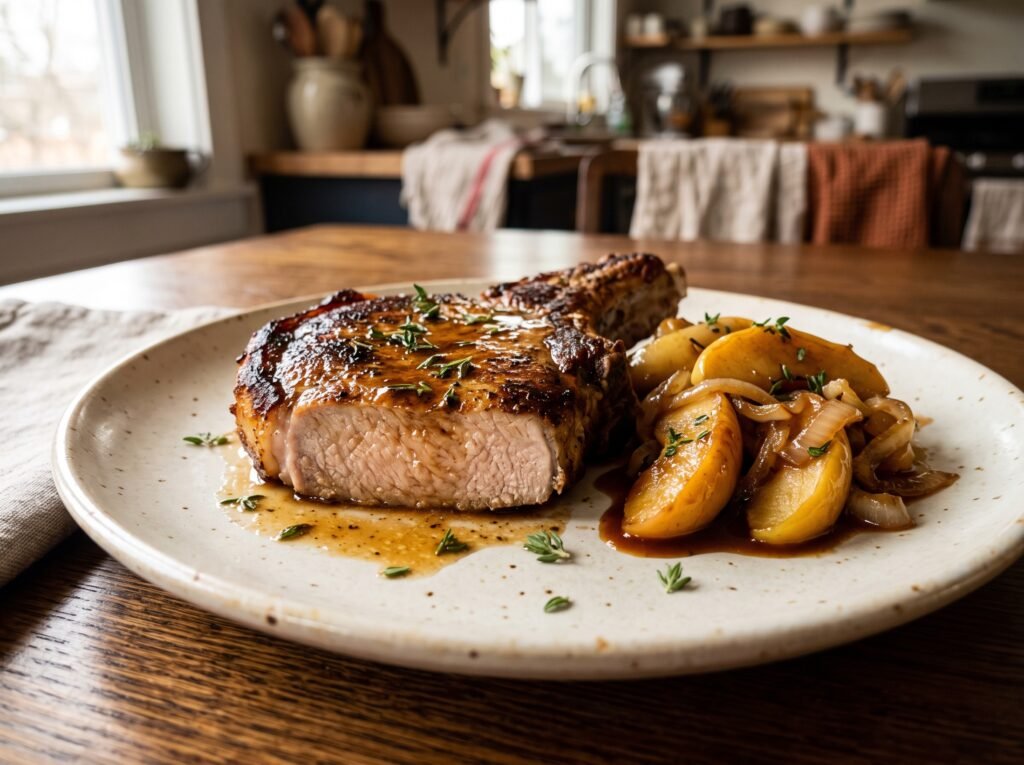
The exact finishing time depends on the thickness of the chops and how much they cooked during searing, so use the temperature as your guide instead of relying only on the clock. Let the pork rest in the skillet for at least 3 minutes before serving. Spoon the apples, onions, and pan sauce over each chop.
Tips for Tender Pork and a Balanced Sauce
- Choose chops of similar thickness. Thin and thick chops cook at different speeds, so matching their size makes the timing easier.
- Dry the pork before searing. A dry surface browns more readily than a damp one.
- Do not crowd the skillet. If the chops are touching, brown them in batches. Crowding can make them steam instead of sear.
- Use firm apples. Softer apples can break down quickly in the sauce. Cut the wedges evenly so they cook at about the same rate.
- Keep the sauce at a gentle simmer. A hard boil can overcook the pork before the apples are ready.
- Adjust the flavor at the end. If the sauce tastes too sweet, add a small splash of broth. If it tastes flat, add a little more Dijon, salt, or black pepper.
Easy Variations
Use boneless pork chops as written, or substitute bone-in chops of a similar thickness. Bone-in chops may need extra time, so check each one with a thermometer.
For a deeper fall flavor, add ½ teaspoon of rubbed sage with the thyme. You can also stir in a teaspoon of apple cider vinegar at the end if you prefer a brighter, tangier sauce.
If you want a thicker sauce, transfer the cooked pork chops to a clean plate after they reach temperature. Simmer the sauce and apples for a few more minutes, stirring often, then spoon it over the pork. Avoid reducing it too far; the sauce should still be easy to pour.
What to Serve with Apple Cider Pork Chops
Mashed potatoes are an easy match for the cider sauce. Buttery egg noodles, rice, or roasted potatoes work well too. For a vegetable side, serve the pork with green beans, Brussels sprouts, or a simple green salad.
If you are putting together a fall dinner, keep the sides simple. The apples and onions already bring sweetness and plenty of flavor to the plate.
Skillet Apple Cider Pork Chops
Ingredients
Method
- Pat the pork chops dry and season both sides with salt and pepper.
- Heat olive oil in a large skillet over medium-high heat. Sear the chops for about 3 minutes per side. Transfer them to a plate.
- Reduce the heat to medium. Add butter and onion; cook for 3 minutes. Add apples and cook for 3 to 4 minutes.
- Stir in garlic and thyme; cook for 30 seconds. Pour in cider and broth, add Dijon, and scrape up the browned bits. Simmer for 3 to 4 minutes.
- Return the pork chops and their juices to the skillet. Cook gently, turning once if needed, until the thickest part of each chop reaches 145°F.
- Rest the pork for at least 3 minutes. Serve with the apples, onions, and sauce spooned over the top.
Notes
Storing and Reheating Leftovers
Refrigerate leftover pork chops, apples, onions, and sauce in a covered container. Reheat them gently in a covered skillet over low heat with a splash of broth or water. Turn the chops once and warm them just until heated through to help keep them from drying out.
The sauce may thicken as it sits. Stir in a little extra broth while reheating until it loosens to your liking.
FAQ
Can I use apple juice instead of apple cider?
Yes. Choose unsweetened apple juice if that is what you have. The sauce may taste a little sweeter, so taste it before serving and add a small splash of broth or cider vinegar if you want to balance it.
Should I peel the apples?
No. The peel helps the wedges hold their shape, and it adds color to the skillet. Wash and dry the apples before slicing them.
Can I use bone-in pork chops?
Yes. Use chops close to the same thickness and allow for a longer cooking time if needed. Check the thickest part of each chop with a food thermometer.
What kind of apple cider should I buy?
Use nonalcoholic apple cider, often sold refrigerated in the juice section during fall. Do not use hard cider for this recipe.
Disclaimer:
This recipe is provided for informational purposes. Cooking times can vary by equipment and ingredient size; use a food thermometer and follow safe food-handling practices. This content is not professional medical advice and is not a substitute for advice from a qualified professional