
Serving an elegant, restaurant-quality dessert that feels indulgent yet actively supports your wellness goals is the hallmark of modern culinary design. For health-conscious diners, particularly those focused on cardiovascular longevity and joint mobility, traditional heavy cream and refined sugar desserts often induce lethargy and digestive distress. I wanted to engineer a visually stunning finale that delivers a luxurious, velvety mouthfeel while providing functional nutrition. By utilizing high-quality gelatin—which is pure, joint-supporting collagen—paired with antioxidant-rich green tea and a light dairy-alternative base, we created a masterpiece that soothes the gut and delights the palate.
Today, I am sharing the exact culinary technique behind this vibrant Coconut Matcha Panna Cotta, a deceivingly simple, zero-bake dessert guaranteed to impress your guests without derailing your health.
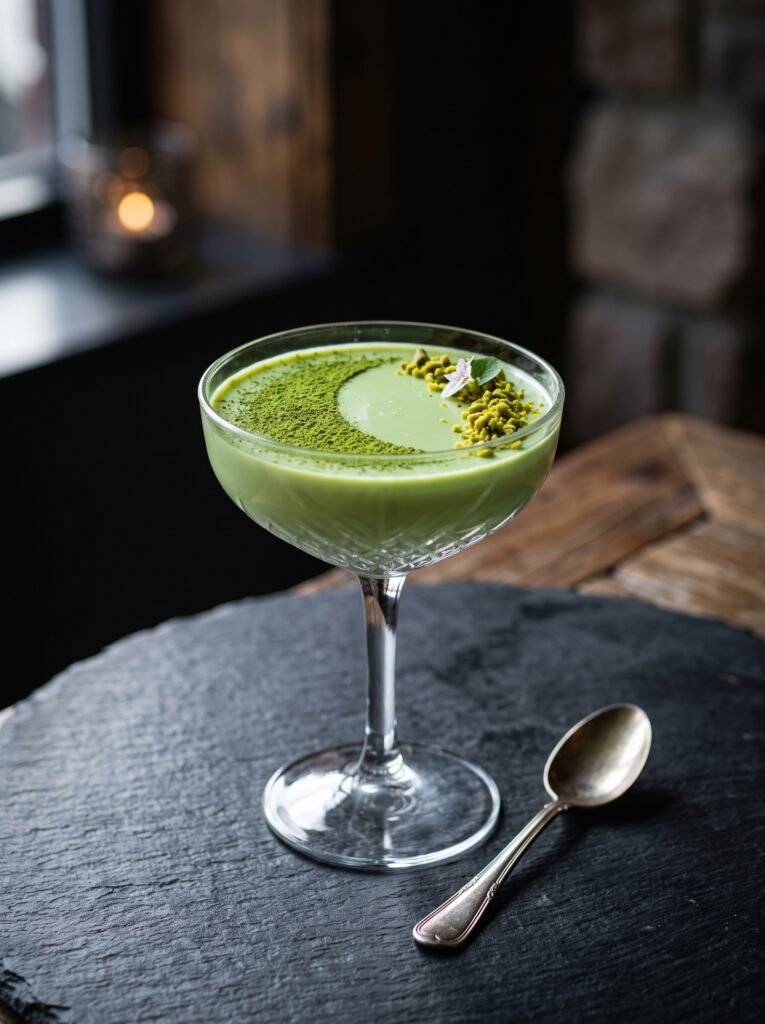
Part 1: Why Coconut Matcha Panna Cotta Is the Ultimate Healthy Dessert
Joint Support Through Culinary Collagen (Gelatin)
When formulating a dessert for optimal aging and active recovery, structural ingredients matter immensely. Traditional Italian panna cotta relies on unflavored gelatin to achieve its signature “wobble.” From a nutritional standpoint, gelatin is simply cooked collagen—the exact protein matrix crucial for repairing cartilage, maintaining joint lubrication, and supporting skin elasticity. Every serving of this Coconut Matcha Panna Cotta delivers a functional dose of these essential amino acids. Instead of consuming a heavy, flour-based cake that offers zero structural benefit, you are actively supporting your joint mobility with an elegant, melt-in-your-mouth treat.
Heart-Healthy Antioxidants Without the Sugar Crash
Ceremonial-grade matcha is celebrated globally for its profound cardiovascular benefits. Unlike traditional desserts that rely on processed cocoa or artificial flavorings, this Coconut Matcha Panna Cotta utilizes finely milled green tea leaves. Matcha is exceptionally rich in catechins, specifically EGCG, which are powerful antioxidants known to protect the heart and reduce cellular inflammation. Furthermore, matcha provides a steady, calming focus rather than a jagged caffeine spike. By sweetening this Coconut Matcha Panna Cotta lightly with pure maple syrup instead of refined white sugar, we maintain a low glycemic index, ensuring you feel energized and stable after dinner.
Gut-Friendly, Velvet-Smooth Dairy Alternatives
Classic panna cotta heavily relies on reduced heavy cream, which frequently triggers digestive bloating and discomfort. To modernize the dish and support gut health, this Coconut Matcha Panna Cotta replaces heavy dairy with a meticulously balanced blend of light coconut milk and plain Greek yogurt. The coconut milk provides the necessary fat lipids for a luxurious mouthfeel, while the probiotic-rich Greek yogurt adds a subtle tang that balances the earthy green tea. This intelligent substitution makes this Coconut Matcha Panna Cotta incredibly easy to digest, ensuring your evening ends on a comfortable, satisfying note.
Part 2: Essential Ingredients and the Science of the Components
Ingredients for the Silken Matcha Base
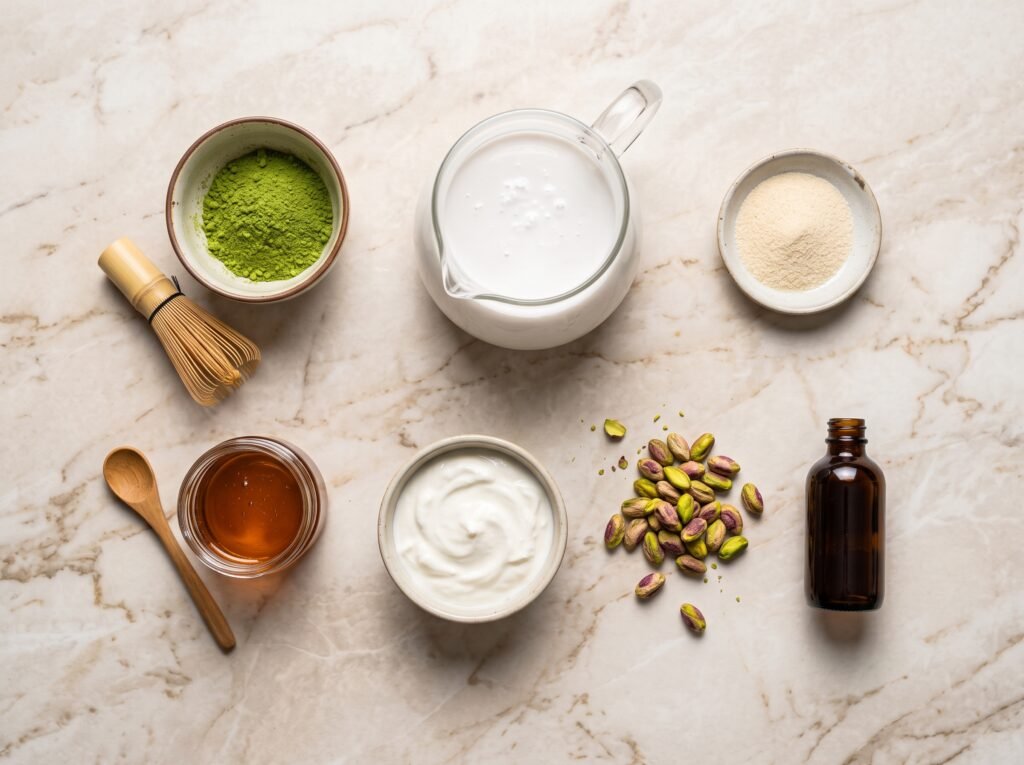
For the creamy panna cotta base, I use:
400 ml light canned coconut milk (shaken well)
120 g plain whole-milk Greek yogurt, at room temperature
1 ½ teaspoons unflavored powdered gelatin (100% grass-fed preferred)
3 tablespoons cold water (for blooming)
1 tablespoon ceremonial-grade matcha green tea powder
3 tablespoons pure maple syrup or raw honey
1 teaspoon pure vanilla extract
1 pinch fine sea salt
I highly recommend using ceremonial-grade matcha rather than culinary-grade when crafting your Coconut Matcha Panna Cotta. Ceremonial matcha boasts a vibrant, electric green hue and a naturally sweet, smooth flavor profile, whereas lower grades can impart an unappealing murky color and a bitter, astringent aftertaste. Blooming the unflavored gelatin in cold water is a non-negotiable step; this hydrates the collagen granules, ensuring they melt seamlessly into the warm coconut milk without creating rubbery lumps in your final dessert.
Ingredients for the Pistachio Garnish
For the elegant topping, I use:
3 tablespoons roasted unsalted pistachios, finely crushed
1 teaspoon extra matcha powder (for dusting)
The addition of crushed pistachios provides a necessary mechanical contrast to the impossibly smooth texture of the Coconut Matcha Panna Cotta. Beyond texture, pistachios are exceptionally heart-healthy, packed with lutein, potassium, and unsaturated fats. Dusting the dessert with a tiny pinch of dry matcha just before serving mimics the aesthetic of a high-end Michelin-starred pastry presentation.
Part 3: Step-by-Step Guide to Assembling Your Dessert
Step 1: Blooming the Gelatin for a Perfect Set
The foundational secret to a flawless Coconut Matcha Panna Cotta is proper gelatin hydration. In a small, shallow bowl, pour the three tablespoons of cold water. Evenly sprinkle the unflavored gelatin powder across the surface of the water. Do not stir it; simply let it sit undisturbed for five to ten minutes. The granules will absorb the moisture and swell into a firm, rubbery puck. This process, known as “blooming,” guarantees that the collagen will dissolve instantly and evenly when introduced to heat.
Step 2: Whisking the Matcha and Simmering the Base
While the gelatin blooms, prepare the liquid base of your Coconut Matcha Panna Cotta. In a medium saucepan, combine the light coconut milk, pure maple syrup, vanilla extract, and a pinch of sea salt. Sift the matcha powder directly into the saucepan through a fine-mesh strainer to eliminate any static clumps. Whisk vigorously over medium-low heat until the matcha is completely dissolved and the liquid is steaming and vibrant green, but do not let it reach a rolling boil. Intense boiling will degrade the delicate antioxidants in the tea.
Step 3: Tempering the Dairy and Dissolving the Collagen
Once the coconut matcha mixture is hot and steaming, remove the saucepan entirely from the heat. Scrape the bloomed gelatin puck into the hot liquid and whisk gently for sixty seconds until the gelatin is completely dissolved and invisible. Next, you must temper the Greek yogurt. Whisk the room-temperature yogurt in a separate bowl, then slowly pour in half a cup of the hot matcha liquid, stirring constantly. Pour this warmed yogurt mixture back into the main saucepan. This crucial step prevents the cold yogurt from curdling when it meets the hot base, ensuring your Coconut Matcha Panna Cotta remains perfectly silky.
Step 4: Chilling and Setting the Panna Cotta
To achieve absolute perfection, strain the entire liquid mixture one final time through a fine-mesh sieve into a pouring jug. This captures any microscopic undissolved gelatin or matcha clumps. Carefully pour the liquid into four elegant glass coupes, martini glasses, or ceramic ramekins. Cover each glass tightly with plastic wrap to prevent a skin from forming, and transfer them to the refrigerator. Allow your Coconut Matcha Panna Cotta to chill undisturbed for at least four hours, or ideally overnight, until perfectly set with a delicate wobble.
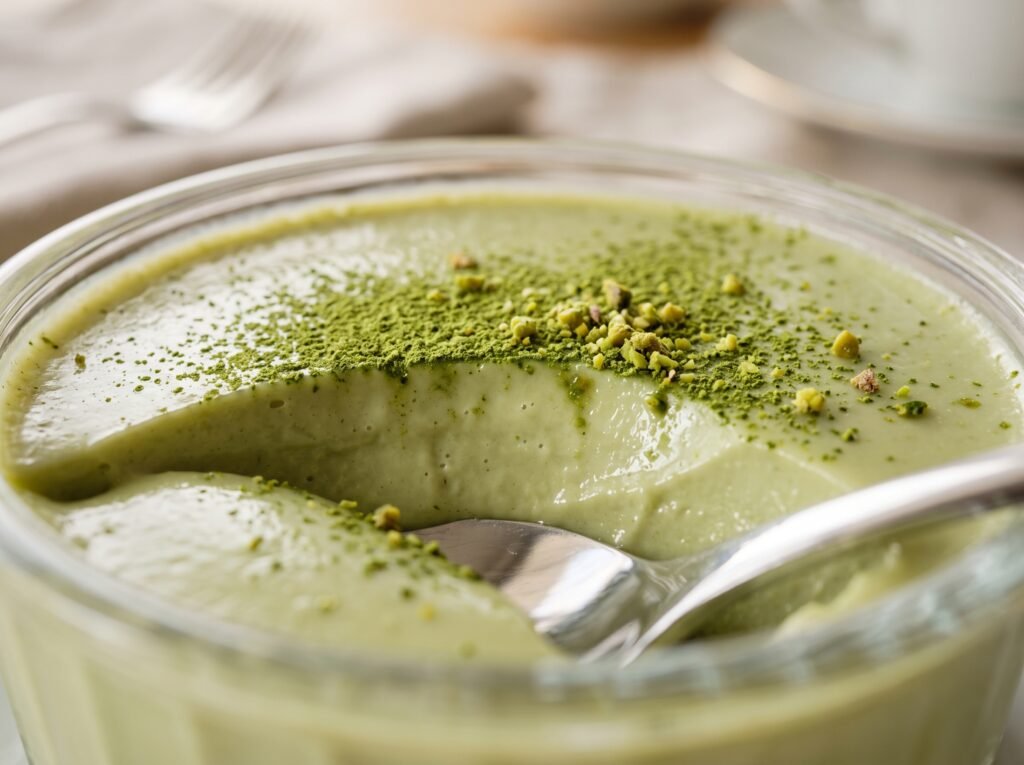
Part 4: Make-Ahead & Meal Prep Instructions
The Ultimate Dinner Party Dessert
Because this dessert relies on thermal setting, it is the quintessential make-ahead dish. You can prepare this Coconut Matcha Panna Cotta up to three days before your dinner party. Stored securely in the refrigerator, the flavors actually meld and deepen over time. This completely eliminates any dessert-related stress on the day of your event, allowing you to simply pull the chilled glasses from the fridge, garnish them, and serve immediately.
Protecting the Dessert from Refrigerator Odors
Dairy and coconut milk are highly susceptible to absorbing ambient odors. To keep your Coconut Pearl Matcha Panna Cotta tasting pristine and purely of sweet green tea, you must ensure the plastic wrap is pulled taut and sealed tightly against the edges of the serving glasses. Do not store the dessert directly next to pungent ingredients like raw onions or strong cheeses.
Part 5: Delicious Recipe Variations & Dietary Adaptations
The 100% Vegan Adaptation: Using Agar-Agar
If you follow a strict plant-based lifestyle, you can easily adapt this Coconut Matcha Panna Cotta by swapping the animal-based gelatin for agar-agar powder, a natural setting agent derived from seaweed. Substitute half a teaspoon of agar-agar powder for the gelatin. Unlike gelatin, agar-agar must be brought to a gentle boil for two minutes to activate its setting properties. Replace the Greek yogurt with thick coconut cream, and your vegan dessert will set beautifully with a slightly firmer texture.
Flavor Upgrades: Yuzu or Black Sesame
To further elevate the Asian-fusion profile of your Coconut Matcha Panna Cotta, consider adding complementary aromatic notes. A half-teaspoon of fresh yuzu juice added off the heat introduces a bright, floral citrus lift that cuts through the creamy coconut perfectly. Alternatively, serving the dessert alongside a small drizzle of toasted black sesame paste adds a profound, nutty depth that contrasts the sweet, grassy matcha.
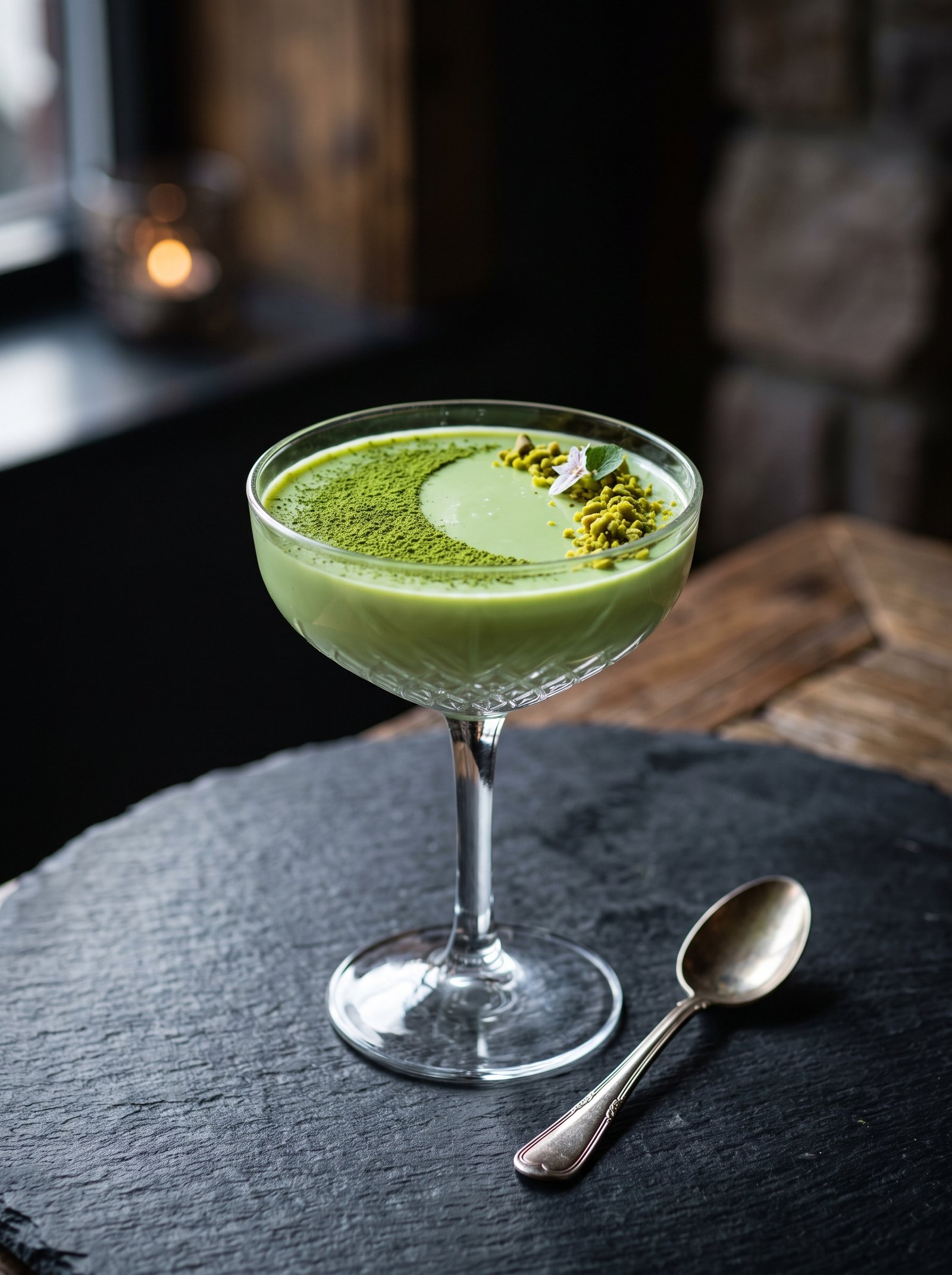
Silken Coconut Matcha Panna Cotta (With Crushed Pistachios)
Ingredients
Method
- Bloom the gelatin: In a small bowl, sprinkle the gelatin powder evenly over the cold water. Do not stir. Let it sit undisturbed for 5 to 10 minutes to bloom and hydrate into a firm puck.
- Simmer the base: In a medium saucepan, combine the coconut milk, maple syrup, vanilla, and salt. Sift in the matcha powder to prevent clumps. Whisk vigorously over medium-low heat until the matcha dissolves and the liquid is steaming hot (do not boil).
- Dissolve the gelatin: Remove the saucepan from the heat. Add the bloomed gelatin puck and whisk gently for 60 seconds until completely dissolved.
- Temper the yogurt: In a separate bowl, whisk the room-temperature Greek yogurt. Slowly pour in ½ cup of the hot matcha liquid into the yogurt, stirring constantly to temper it. Pour this yogurt mixture back into the main saucepan and whisk until silky smooth.
- Strain and chill: Pour the entire mixture through a fine-mesh strainer into a pouring jug. Divide the liquid evenly among 4 glass coupes or ramekins. Cover tightly with plastic wrap and refrigerate for at least 4 hours (or overnight) until fully set.
- Garnish: Just before serving, uncover and garnish with finely crushed pistachios and a light dusting of extra matcha powder. Serve chilled.
Notes
- Use ceremonial-grade matcha for the best flavor and vibrant green color; culinary grade will taste bitter.
- Do not let the coconut milk boil; intense heat degrades the delicate antioxidants in the tea and weakens the gelatin.
-
To make this dessert vegan, substitute ½ teaspoon of agar-agar powder for the gelatin (boil for 2 minutes to activate) and use thick coconut cream instead of Greek yogurt.Always strain your hot liquid through a fine-mesh sieve before pouring it into your serving glasses. This captures any tiny clumps of matcha or gelatin and guarantees a flawless, restaurant-quality texture.
Part 6: Pro-Chef Tips for a Flawless Presentation
Straining is Non-Negotiable
The difference between a home-style pudding and a restaurant-caliber Coconut Matcha Panna Cotta is the texture. Even with meticulous whisking, tiny specks of matcha or gelatin can remain suspended in the liquid. Passing the final warm mixture through a fine-mesh sieve guarantees an impossibly smooth, glassy finish on the palate that defines professional pastry work.
The Art of the Garnish
Wait to garnish your Coconut Matcha Panna Cotta until the exact moment of service. If you apply the crushed pistachios and dry matcha dust while the dessert is setting in the refrigerator, the moisture from the pudding will turn the nuts soggy and cause the matcha powder to bleed into dark, unappealing streaks. A fresh, dry garnish provides that critical last-second crunch and vibrant visual contrast.
Part 7: Storage and Food Safety Instructions
Proper Refrigeration
Store your fully set Coconut Matcha Panna Cotta in the coldest part of your refrigerator. Kept tightly covered, they will remain food-safe and texturally perfect for up to four days. As the days progress, the gelatin may continue to firm up slightly, but the dessert will remain delicious.
Why You Should Never Freeze Panna Cotta
Do not attempt to freeze this Coconut Matcha Panna Cotta. Freezing destroys the delicate protein matrix created by the gelatin and ruptures the emulsion of the coconut milk and yogurt. Upon thawing, the dessert will separate into a grainy, weeping puddle of water and curdled dairy. This elegant dessert must be enjoyed fresh from the refrigerator.
FAQ
Why didn’t my Coconut Matcha Panna Cotta set properly?
A runny panna cotta usually results from three common errors: failing to bloom the gelatin in cold water first, boiling the liquid after the gelatin is added (which destroys its setting strength), or cutting the refrigeration time short. Ensure you use the exact measurements provided, dissolve the bloomed gelatin completely off the direct heat, and allow a full four hours of uninterrupted chilling time.
Can I make this with regular green tea bags?
No. Standard green tea bags contain steeped leaves that cannot provide the intense color, flavor, or texture required for a Coconut Matcha Panna Cotta. You must use finely milled matcha green tea powder, as the entire leaf is suspended within the dessert to provide the signature vibrant hue and antioxidant benefits.
Can I unmold this dessert onto a plate?
Yes! While serving it in a glass coupe is easier and highly elegant, you can unmold it. If you plan to invert your Coconut Matcha Panna Cotta onto a plate, lightly grease the inside of your ramekins with a microscopic drop of neutral oil before pouring in the liquid. To unmold, dip the bottom of the set ramekin into a bowl of hot water for five seconds to loosen the edges, then flip it onto a chilled plate.
Disclaimer:
The culinary and nutritional information provided in this article is strictly for educational and informational purposes only. It does not constitute professional medical advice, diagnosis, or treatment. While I strive to provide accurate macronutrient insights and dietary substitution recommendations, these should not replace consultations with qualified healthcare professionals or registered dietitians. Always consult your physician before making significant changes to your diet, especially if you manage specific cardiovascular, metabolic, or digestive conditions. Any claims regarding heart health, joint mobility, collagen benefits, or digestive comfort are substantiated by general culinary science but are not intended as clinical guidelines.