
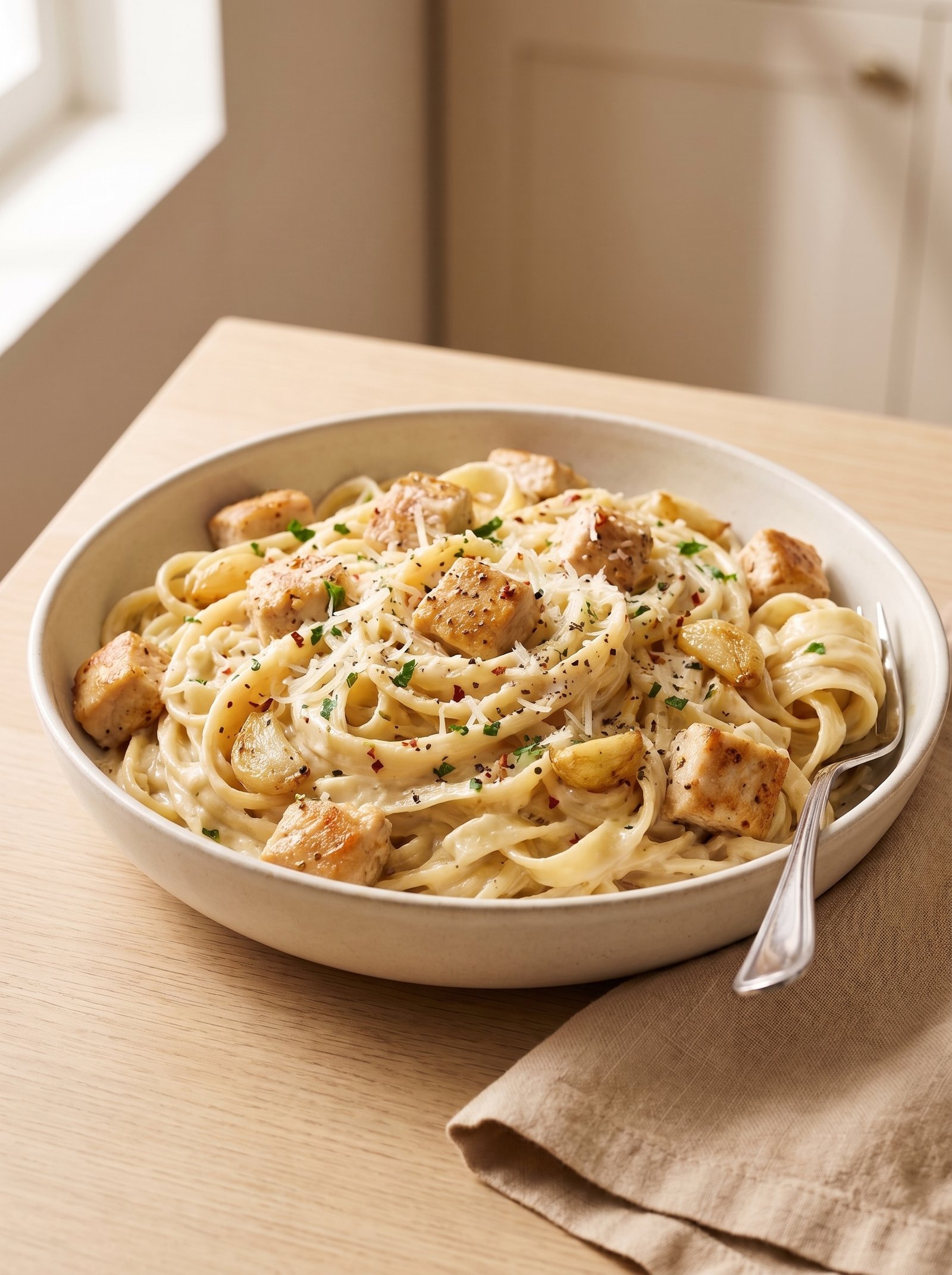
Garlic Parmesan Chicken Pasta

When my aunt first made Garlic Parmesan Chicken Pasta for a busy family dinner, I remember being surprised by how quickly the kitchen filled with the aroma of garlic and butter. I watched her brown the chicken, stir together the creamy Parmesan sauce, and toss everything with pasta while I expected the meal to take much longer. Since then, I have made this combination many times, especially when I want something comforting without spending an entire evening cooking. My approach focuses on well-seasoned chicken, properly cooked pasta, fresh garlic, Parmesan, and a smooth sauce that brings every component together.
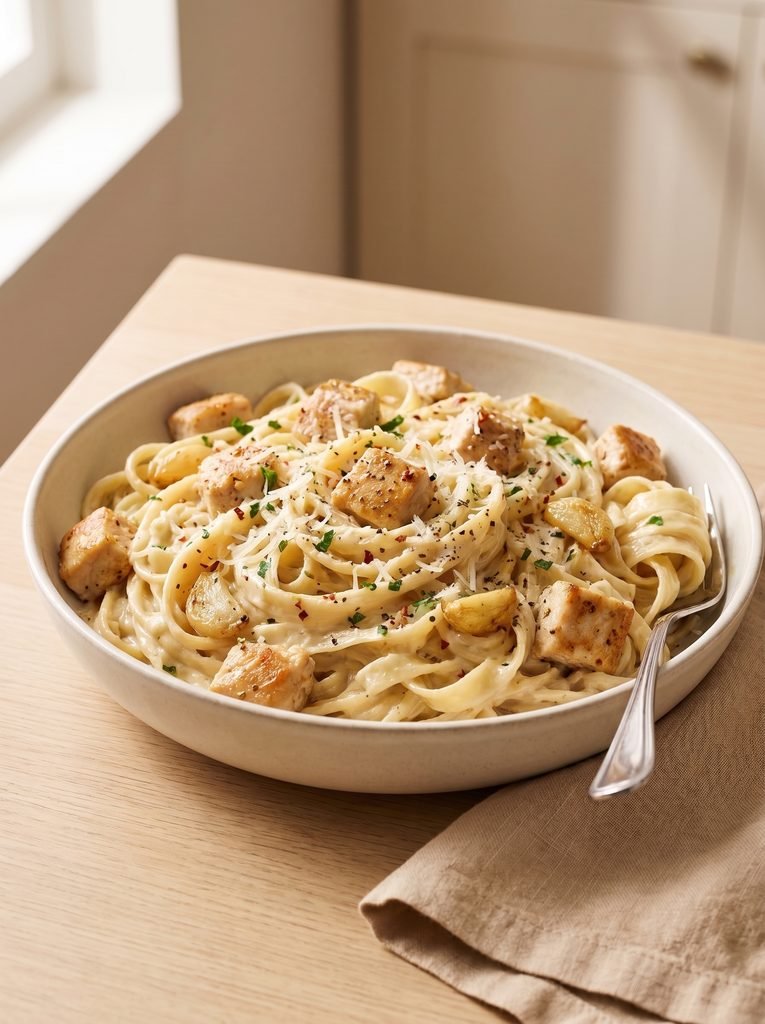
Garlic Parmesan Chicken Pasta with creamy sauce and golden chicken

What Is Garlic Parmesan Chicken Pasta?

What makes Garlic Parmesan Chicken Pasta so creamy and flavorful

I think the appeal of Garlic Parmesan Chicken Pasta comes from the balance between a few familiar ingredients rather than from complicated cooking. I combine tender chicken with pasta, fresh garlic, butter or olive oil, Parmesan cheese, and a creamy sauce that coats each piece. The garlic provides a fragrant savory foundation, while Parmesan adds a distinctly salty, nutty flavor. The cream gives the sauce its richness, and the chicken turns the dish into a substantial dinner. When I combine the pasta with the sauce while everything remains warm, the result is cohesive, creamy, and satisfying without requiring an elaborate preparation.

Why this chicken pasta recipe works for busy weeknights

I like this recipe particularly because I can organize the cooking so several steps happen efficiently. While the pasta cooks, I prepare and sear the chicken. I then use the same skillet to develop the garlic and Parmesan sauce, which also allows the browned bits from the chicken to contribute additional flavor. The process can be completed in roughly 30 minutes when the ingredients are prepared in advance. For me, that makes this creamy chicken pasta especially practical for a weeknight meal when I want a homemade dinner without complicated equipment or a long list of techniques.

Garlic Parmesan Chicken Pasta versus traditional Alfredo

Although the two dishes share creamy Parmesan characteristics, I do not treat them as identical recipes. Traditional Alfredo has a relatively simple foundation centered on pasta, butter, and Parmesan, while this chicken pasta version typically adds seasoned chicken, garlic, and additional ingredients such as cream or chicken broth. The garlic creates a stronger aromatic profile, and the chicken provides a savory protein component. I also have more flexibility with vegetables, seasonings, and pasta shapes. That flexibility makes this recipe suitable for different preferences while maintaining the central combination of garlic, Parmesan, chicken, pasta, and creamy sauce.

Why You Will Love This Garlic Parmesan Chicken Pasta

Creamy garlic Parmesan sauce

The sauce is the part I pay the closest attention to because it determines the final texture of the dish. I prefer freshly grated Parmesan and gentle heat because the cheese needs to incorporate smoothly into the warm liquid. I avoid aggressively boiling the sauce after adding the cheese because excessive heat can negatively affect the texture. Reserved pasta water also gives me a useful way to adjust consistency. A small amount can loosen a thick sauce while helping it cling to the noodles.

Juicy, golden chicken

I season the chicken before cooking and give it enough space in the skillet to develop a golden exterior. That browning adds a deeper savory character than simply simmering the chicken in the sauce. I remove the chicken once it is cooked and return it toward the end of the process. This approach allows the chicken to remain the central protein without unnecessarily exposing it to prolonged cooking.

A quick 30-minute dinner

I structure the preparation around efficiency. The pasta cooks while I prepare the chicken, and the sauce comes together in the same skillet afterward. This reduces both cooking time and cleanup. For a busy household, that combination can make a creamy pasta dinner more practical than recipes that require several separate pans or lengthy preparation.

Simple ingredients and flexible substitutions

I can easily adjust the recipe according to what I have available. Penne can replace fettuccine, chicken thighs can replace chicken breast, and vegetables such as spinach or mushrooms can add another layer of flavor. I can also use half-and-half or milk when I want a lighter sauce, although the final consistency will differ from a sauce made with heavy cream.

Ingredients for Garlic Parmesan Chicken Pasta
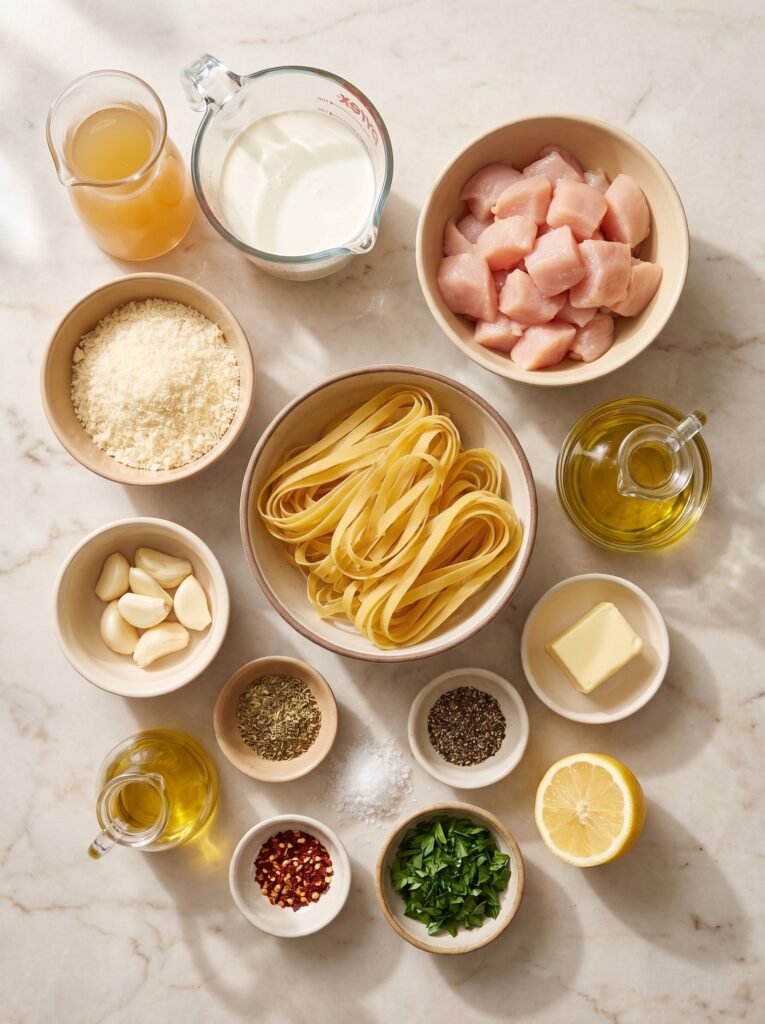
Garlic Parmesan Chicken Pasta ingredients with chicken, pasta, garlic, and Parmesan

Chicken

I use boneless, skinless chicken breasts because they are easy to cut into small, even pieces and cook relatively quickly. Chicken thighs are another practical choice because they have a richer flavor and can remain tender when cooked properly. Regardless of the cut, I make the pieces similar in size so they cook at a consistent rate.

Pasta

Penne, fettuccine, linguine, cavatappi, rotini, and rigatoni all work well. I particularly like shapes with ridges, curves, or hollow centers because they give the creamy sauce plenty of surfaces to cling to. I cook the pasta until al dente rather than soft because it continues absorbing sauce after draining.

Garlic and aromatics

Fresh minced garlic provides the main aromatic character. I prefer fresh garlic when possible because it creates a more pronounced flavor than relying exclusively on garlic powder. Onion can also be incorporated if I want a sweeter aromatic base.

Parmesan and dairy

Freshly grated Parmesan is central to the sauce. I combine it with heavy cream, half-and-half, or another suitable dairy base depending on the desired richness. Parmesan contributes both flavor and body, while the dairy creates the creamy foundation.

Butter, broth, and seasonings

I use butter or olive oil for cooking, while chicken broth can add savory depth to the sauce. My basic seasonings include Italian seasoning, salt, black pepper, and optional red pepper flakes. Fresh parsley provides color and freshness, while a small amount of lemon juice can brighten the finished dish.

How to Make Garlic Parmesan Chicken Pasta Step by Step

Step 1: Cook the pasta until al dente

I begin by bringing a large pot of salted water to a boil and cooking the pasta according to the package instructions. Before draining, I reserve some of the starchy cooking water. I consider this an important step because the water gives me control over the sauce later. After draining, I avoid leaving the pasta sitting for too long because it can become sticky and continue absorbing moisture.

Step 2: Season and sear the chicken

I cut the chicken into evenly sized pieces and season it with salt, black pepper, garlic powder, and Italian seasoning. I heat a large skillet and add oil or butter before placing the chicken inside. I allow the pieces to brown instead of constantly moving them around. Once the chicken is cooked through and has developed a golden exterior, I transfer it to a plate and keep it ready for the final stage.

Step 3: Build the garlic base

I use the same skillet because the browned residue from the chicken provides a useful flavor foundation. I add butter or olive oil and then sauté the minced garlic briefly. I keep the heat controlled because burned garlic can introduce a bitter flavor. Once the garlic becomes fragrant, I am ready to build the creamy sauce.

Step 4: Create the creamy Parmesan sauce

I add chicken broth and cream to the skillet and bring the mixture to a gentle simmer. I allow it to reduce slightly while stirring. I do not use a vigorous boil because I want to maintain a smooth sauce. Once the liquid has developed a richer consistency, I reduce the heat before adding the Parmesan.

Step 5: Add Parmesan and finish the pasta

I stir the freshly grated Parmesan gradually into the warm sauce. Then I add the cooked pasta and toss everything together until the sauce coats the noodles. If the sauce appears too thick, I add reserved pasta water a little at a time. Finally, I return the chicken to the skillet and toss it with the pasta and sauce. I finish the dish with parsley, black pepper, and additional Parmesan.
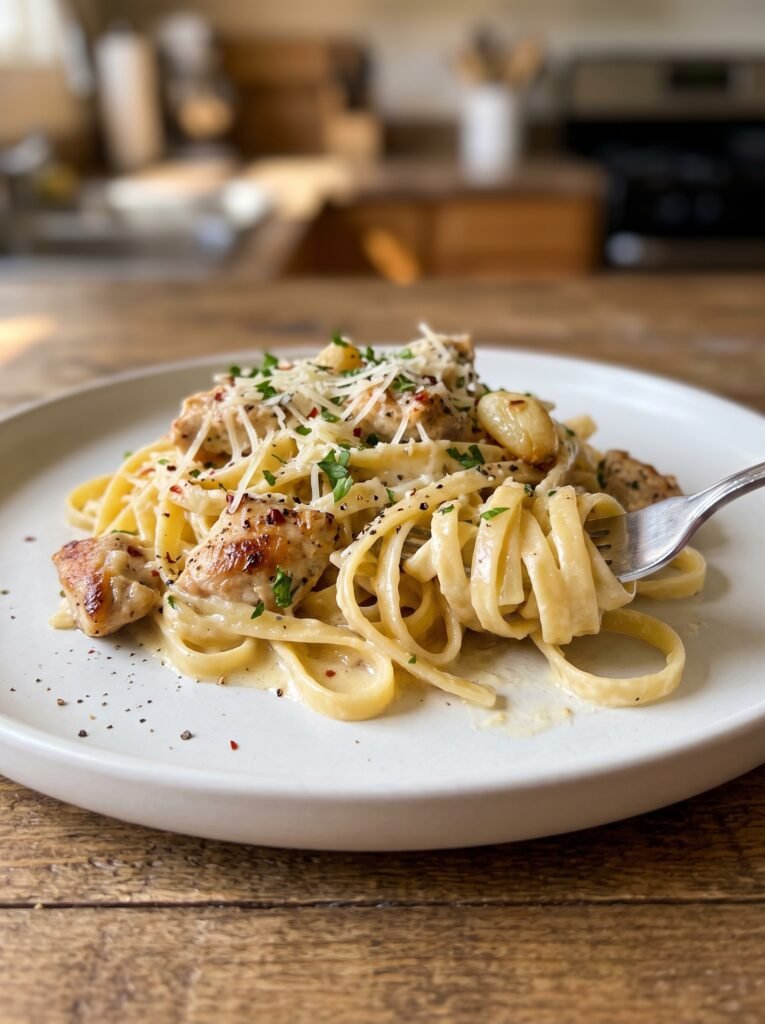
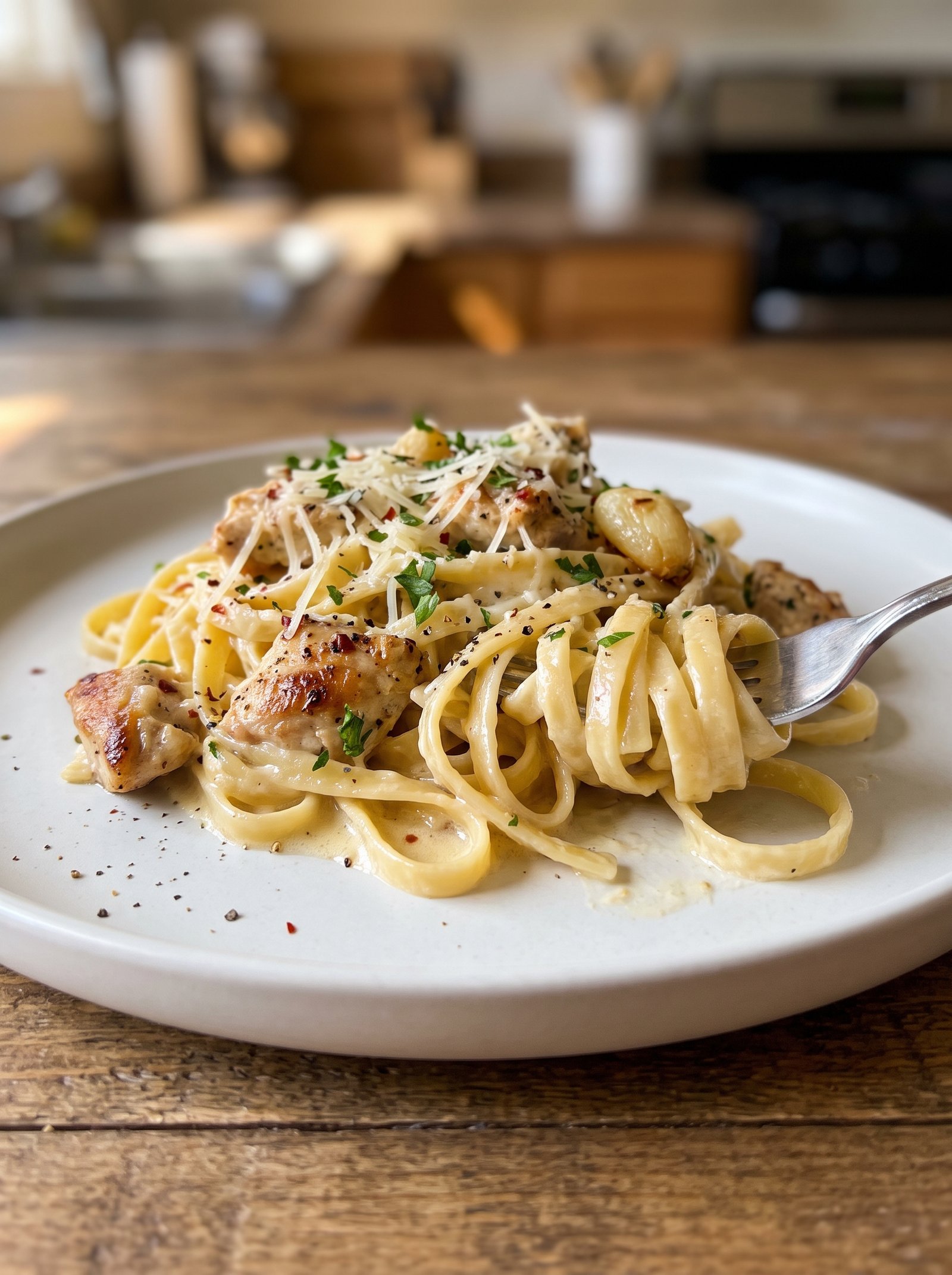
Creamy Garlic Parmesan Chicken Pasta with tender chicken and Parmesan

Garlic Parmesan Chicken Pasta

Creamy garlic Parmesan pasta tossed with tender golden chicken for an easy, comforting weeknight dinner.
Prep Time 10 minutes
Cook Time 20 minutes
Total Time 30 minutes
Servings: 4 4
Course: Dinner
Cuisine: American-Italian
Calories: 650

Ingredients
  

  • 450 g boneless skinless chicken breast, cut into bite-sized pieces
  • 340 g penne pasta
  • 2 tablespoons olive oil
  • 2 tablespoons unsalted butter
  • 4 cloves garlic minced
  • 240 ml heavy cream
  • 120 ml chicken broth
  • 100 g freshly grated Parmesan cheese
  • 1 teaspoon Italian seasoning
  • ½ teaspoon garlic powder
  • ½ teaspoon salt
  • ½ teaspoon black pepper
  • ¼ teaspoon red pepper flakes optional
  • 2 tablespoons fresh parsley chopped
  • 60 –120 ml reserved pasta water as needed

Method
 

Cook the pasta: Boil the pasta in salted water until al dente. Reserve some pasta water, then drain.
    Cook the chicken: Season chicken with garlic powder, Italian seasoning, salt, and pepper. Heat olive oil in a large skillet and cook chicken until golden brown and cooked through. Remove and set aside.
      Sauté the garlic: Add butter to the same skillet. Add minced garlic and cook for about 30–60 seconds until fragrant.
        Make the sauce: Pour in chicken broth and heavy cream. Bring to a gentle simmer and cook for 2–3 minutes.
          Add Parmesan: Reduce the heat and gradually stir in the freshly grated Parmesan until the sauce becomes smooth and creamy.
            Combine: Add the cooked pasta and toss until evenly coated. Add reserved pasta water a little at a time if the sauce is too thick.
              Add chicken: Return the chicken to the skillet and toss everything together until heated through.
                Finish: Add fresh parsley, black pepper, and optional red pepper flakes. Serve immediately with extra Parmesan.

                  Notes

                  • Freshly grated Parmesan gives the smoothest sauce.
                  • Refrigerate leftovers in an airtight container.
                  • Add a splash of milk or broth when reheating.
                    Cook the garlic gently and never let it burn. Burned garlic can make the entire creamy sauce bitter.

                  How to Make the Best Creamy Garlic Parmesan Sauce

                  Why fresh Parmesan matters

                  I strongly prefer freshly grated Parmesan for this recipe because it incorporates more naturally into a warm sauce. I add it gradually rather than placing a large quantity into the skillet at once. I also lower the heat before incorporating the cheese. This gives me better control over the final texture and helps prevent the sauce from becoming unnecessarily thick or uneven.

                  The secret to a silky Parmesan sauce

                  The most important technique I use is temperature control. I gently reduce the cream and broth first, then lower the heat before adding Parmesan. I stir continuously while the cheese incorporates. If the sauce becomes thicker than I want, I add a small amount of reserved pasta water. If it remains too thin, I allow it to simmer gently before adding more cheese.

                  How reserved pasta water improves the sauce

                  I treat pasta water as an ingredient rather than something to discard immediately. Its starch can help loosen the sauce while allowing it to cling to the pasta. I add it gradually because adding too much can make the sauce watery. A few tablespoons can be enough to transform a thick sauce into a smoother consistency.

                  How to Keep the Chicken Juicy and Flavorful

                  Choose the right chicken cut

                  I generally choose chicken breast when I want lean, bite-sized pieces, but boneless chicken thighs can provide a richer result. Whichever cut I select, I cut it into similarly sized pieces. Consistency matters because smaller pieces can cook quickly, while irregular pieces may cook unevenly.

                  Do not overcrowd the skillet

                  I avoid placing too much chicken into the skillet at once. When the pan becomes overcrowded, the chicken can release moisture and have difficulty developing the golden exterior I want. If necessary, I cook the chicken in batches and combine everything later.

                  Build flavor with a proper sear

                  I pat the chicken dry, season it, and place it into a properly heated skillet. I give each piece enough time to brown before turning it. Once the chicken has cooked through, I remove it rather than leaving it in the skillet while I prepare the sauce.

                  Best Pasta Shapes for Garlic Parmesan Chicken Pasta

                  Penne, rigatoni, and spiral pasta

                  I often choose penne or rigatoni because their hollow centers and ridges capture creamy sauce. Cavatappi and rotini are also useful because their curves hold sauce exceptionally well. These shapes make each bite feel coated rather than leaving the sauce primarily at the bottom of the plate.

                  Fettuccine and linguine

                  When I want a more classic creamy-pasta appearance, I choose fettuccine or linguine. Their broad surfaces provide plenty of room for the sauce to coat the noodles. The result feels especially suitable for a family dinner or a more traditional pasta presentation.

                  Gluten-free pasta

                  I can substitute gluten-free pasta when necessary. I always follow the cooking instructions on the package because cooking times and textures differ among products. I also monitor the pasta carefully so it remains firm enough to withstand tossing with the creamy sauce.

                  What to Serve With Garlic Parmesan Chicken Pasta

                  Simple sides and garnishes

                  I like serving this rich pasta with something fresh and crisp. A simple green salad provides contrast, while roasted broccoli, asparagus, zucchini, or bell peppers can add vegetables to the meal. Garlic bread is another natural accompaniment because it works well with the remaining creamy sauce.

                  For the finishing touches, I use fresh parsley, freshly cracked black pepper, and a small amount of additional Parmesan. When I prepare the spicy version, I may also add red pepper flakes. These simple garnishes make the plate look more complete without distracting from the main dish.

                  F&Q

                  What pasta works best for Garlic Parmesan Chicken Pasta?

                  I can use penne, rigatoni, cavatappi, rotini, fettuccine, or linguine. My choice depends on the texture I want. Tubular and spiral shapes capture sauce particularly well, while broad noodles create a classic creamy-pasta presentation.

                  Can I use milk instead of heavy cream?

                  Yes, milk can be used, but I expect a lighter and thinner sauce. Half-and-half provides a middle option. If I substitute milk, I pay closer attention to the consistency and use Parmesan and reserved pasta water strategically.

                  Is Garlic Parmesan Chicken Pasta the same as Alfredo?

                  No. The recipes share creamy Parmesan characteristics, but this dish typically incorporates garlic, seasoned chicken, and additional ingredients that distinguish it from a simpler traditional Alfredo preparation.

                  Final Tips for Restaurant-Style Garlic Parmesan Chicken Pasta

                  When I make Garlic Parmesan Chicken Pasta, I focus on a few details that have the greatest effect on the final plate. I use freshly grated Parmesan, brown the chicken before removing it, and cook the garlic carefully. I also reserve pasta water and use it gradually whenever the sauce needs adjustment. Most importantly, I keep the heat gentle after adding the Parmesan and finish the dish by tossing the pasta, sauce, and chicken together while everything is warm. Finally, I add fresh parsley and extra black pepper immediately before serving. These straightforward techniques help me create a creamy, flavorful dinner without making the preparation unnecessarily complicated.

                  Informational Disclaimer

                  This article is provided for general informational and educational purposes and is not a substitute for professional medical, dietary, or food-safety advice. Individual nutritional needs and dietary requirements vary. Readers with allergies, intolerances, medical conditions, or specific dietary restrictions should consult an appropriately qualified professional when necessary. Always follow applicable food-safety practices when handling, cooking, storing, and reheating food.

                  Leave a Comment

                  Recipe Rating