
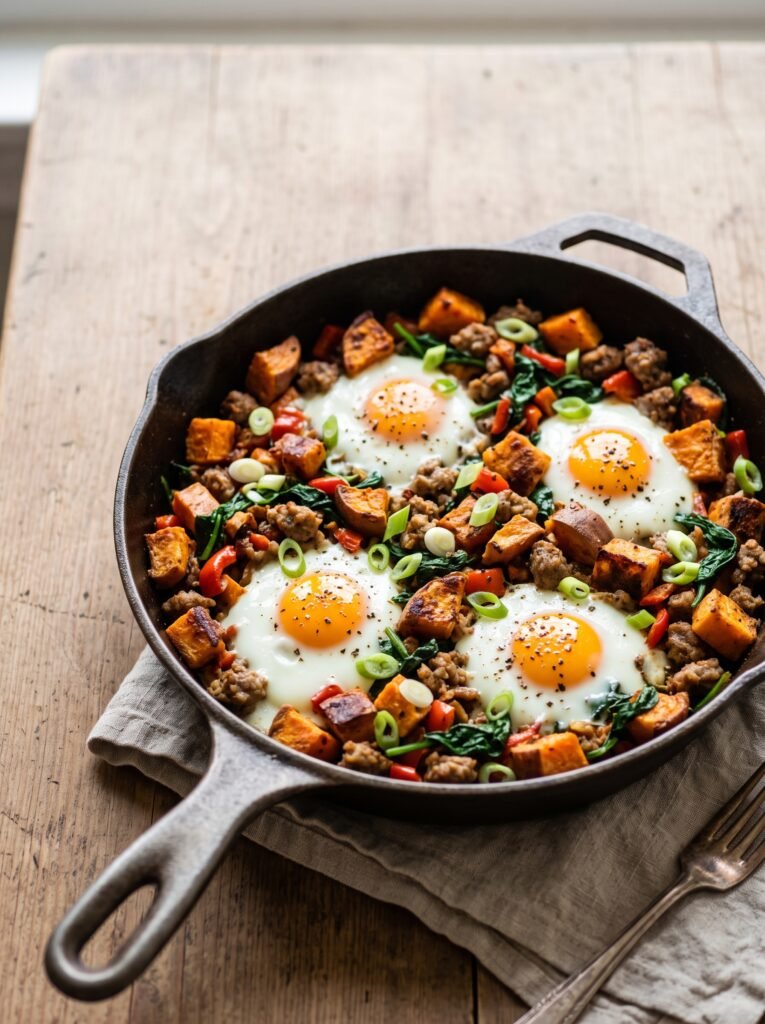
On a chilly Saturday morning, I want breakfast to be hearty without turning the kitchen into a stack of dirty pans. This sweet potato breakfast hash is the kind of skillet I make when I want something savory and cozy: browned sweet potatoes, breakfast sausage, peppers, and spinach, with eggs cooked right on top.
The sweet potatoes get tender under a lid, then crisp up when I uncover the pan. I stir in the sausage and spinach, make little spaces for the eggs, and let them cook until the whites set. I bring the skillet to the table while it’s still warm, with hot sauce nearby for anyone who wants a little kick.
At a glance: 4 servings · 40 minutes · one skillet · sausage, sweet potatoes, and eggs
Why I Make Sweet Potato Breakfast Hash
I like this sweet potato breakfast hash because it gives me a savory breakfast with sweet, smoky, and peppery flavors in the same skillet. The sweet potatoes turn tender inside and brown along the edges. Breakfast sausage adds a savory bite, while red bell pepper and spinach bring color and freshness.
Cooking the eggs right in the skillet keeps the meal simple. I make a few spaces in the hash, crack in the eggs, and cover the pan until the whites are set. If someone prefers a firmer yolk, I leave their egg in a little longer.
This recipe also works for a relaxed weekend breakfast or brunch. I serve the skillet with toast, fruit, or sliced avocado, depending on what I have on hand.
Ingredients for Sweet Potato Breakfast Hash
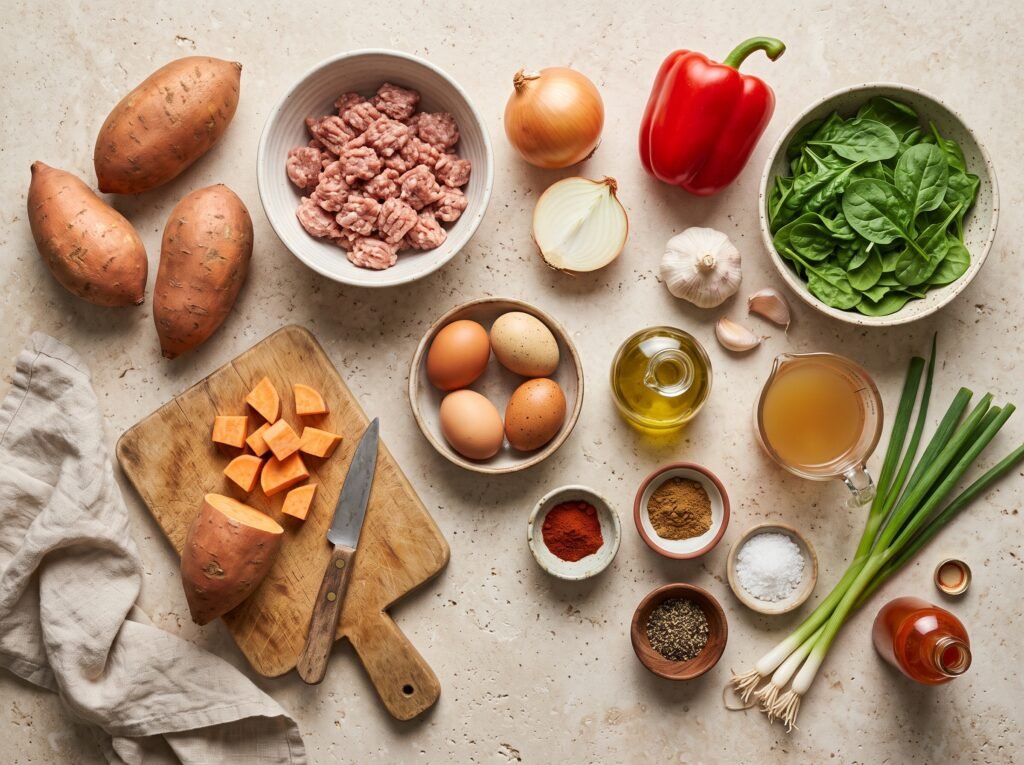
For the hash, I use:
- 1 pound sweet potatoes (about 450 g), scrubbed and cut into ½-inch cubes
- 8 ounces breakfast sausage (225 g)
- 1 tablespoon olive oil (15 ml), if needed
- 1 small yellow onion, diced
- 1 red bell pepper, diced
- 2 garlic cloves, minced
- ½ teaspoon smoked paprika
- ½ teaspoon ground cumin
- ½ teaspoon kosher salt, plus more to taste
- ¼ teaspoon black pepper
- ⅓ cup chicken broth or water (80 ml)
- 2 cups baby spinach (about 60 g)
- 4 large eggs
- 2 green onions, thinly sliced
For serving, I use:
- Hot sauce, optional
- Toast, sliced avocado, or fresh fruit, optional
I cut the sweet potatoes into similar-sized cubes so they cook evenly. I use breakfast sausage for a savory, seasoned flavor, but turkey breakfast sausage works too. If the sausage leaves very little fat in the pan, I add a tablespoon of olive oil before cooking the vegetables.
How I Make Sweet Potato Breakfast Hash
1. Brown the sausage
I heat a large skillet over medium heat. I add the breakfast sausage and cook it for about 6 to 8 minutes, breaking it into small pieces as it browns. When it is cooked through, I transfer it to a plate and leave a little of the drippings in the pan.
If there isn’t much fat left, I add olive oil. I use a large skillet with a lid so I can cook the potatoes and eggs in the same pan.
2. Cook the sweet potatoes and vegetables
I add the sweet potatoes, onion, and red bell pepper to the skillet. I cook them for about 3 minutes, stirring so the vegetables pick up some of the browned bits from the sausage.
I stir in the garlic, smoked paprika, cumin, salt, and black pepper. Then I pour in the broth or water and cover the skillet. I cook the hash for 8 to 10 minutes, stirring once or twice, until the sweet potatoes are tender when I pierce them with a fork.
3. Brown the potatoes and add the sausage and spinach
I remove the lid and let any extra liquid cook off. I spread the potatoes out and let them sit for a few minutes so their edges can brown. Then I stir the cooked sausage and spinach into the skillet.
I cook for another 1 to 2 minutes, just until the spinach wilts. I taste a piece of potato and add more salt or pepper if needed.
4. Cook the eggs in the hash
I use the back of a spoon to make four small spaces in the hash. I crack an egg into each space, cover the skillet, and cook for 4 to 6 minutes, until the egg whites are set and the yolks reach the doneness I like.
If I want the yolks firmer, I leave the skillet covered for another minute or two. I scatter sliced green onions over the top and serve the hash warm.
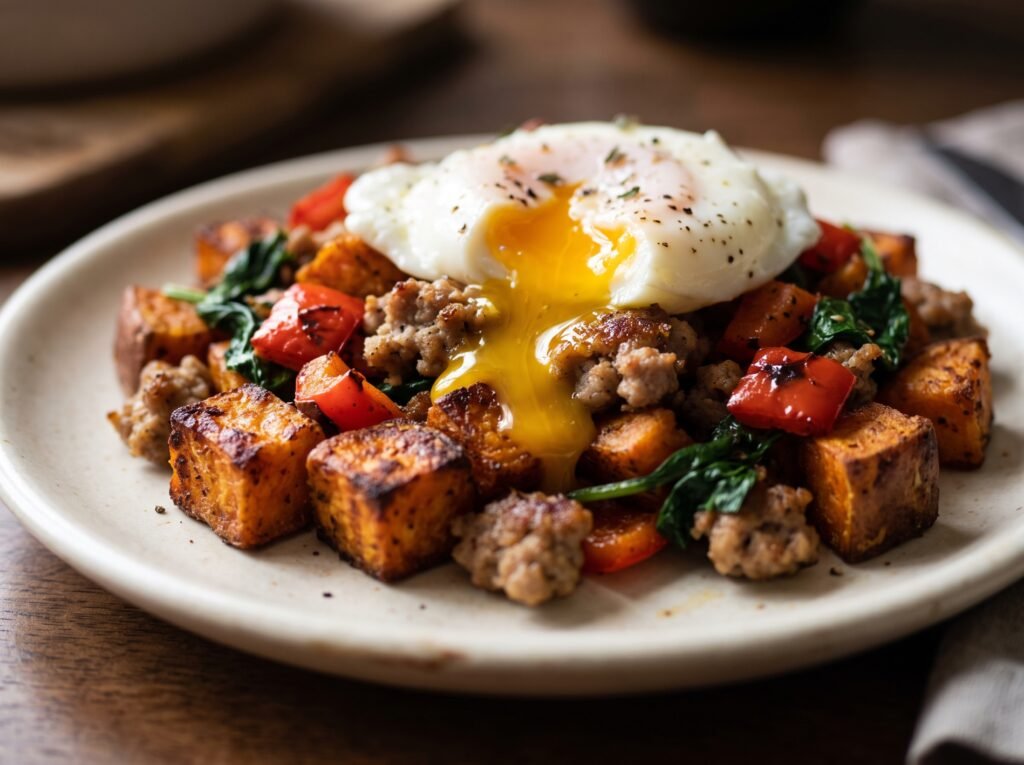
My Tips for Crisp, Tender Ssweet potato breakfast hash
- Cut the potatoes evenly. I use ½-inch cubes so they cook through at about the same time.
- Cover the skillet while the potatoes soften. The small amount of broth helps the centers turn tender.
- Uncover before browning. I let extra moisture cook off so the potato edges can crisp.
- Use a lid for the eggs. Covering the skillet helps the egg whites set without overcooking the hash.
- Adjust the oil as needed. Sausage can leave plenty of fat, so I add oil only if the pan looks dry.
- Serve soon after the eggs cook. The eggs continue to firm up if they sit in the hot skillet.
If the potatoes are tender but not browning, I spread them out and give them a few minutes without stirring. They brown better when they stay in contact with the skillet.
Easy Ways I Change the Recipe
When I want a little more color, I swap the red bell pepper for poblano or green bell pepper. I can also use chopped kale instead of spinach; I add it a few minutes earlier so it has time to soften.
For a meat-free version, I leave out the sausage and add a little more olive oil. I sometimes add black beans for a heartier skillet. If I want a cheesy finish, I sprinkle shredded cheddar over the hash just before adding the eggs.
Make-Ahead and Storage
I can dice the sweet potatoes, onion, and bell pepper the night before and keep them covered in the refrigerator. I can also brown the sausage ahead. At breakfast time, I cook the vegetables and potatoes, then add the eggs fresh so they have the texture I want.
I refrigerate leftover hash without the eggs in a covered container for up to 3 days. I reheat it in a skillet over medium heat, stirring until hot. I cook fresh eggs separately or make spaces in the reheated hash and cook them in the skillet.
What I Serve with Sweet Potato Breakfast Hash
I serve this hash with toast or warm tortillas when I want something to scoop up the potatoes and egg. Fresh fruit makes an easy side, and sliced avocado is nice with the smoky sausage.
For brunch, I bring the skillet to the table and set out hot sauce and extra green onions. It’s colorful enough to serve as the centerpiece, and everyone can choose how they want their eggs cooked.
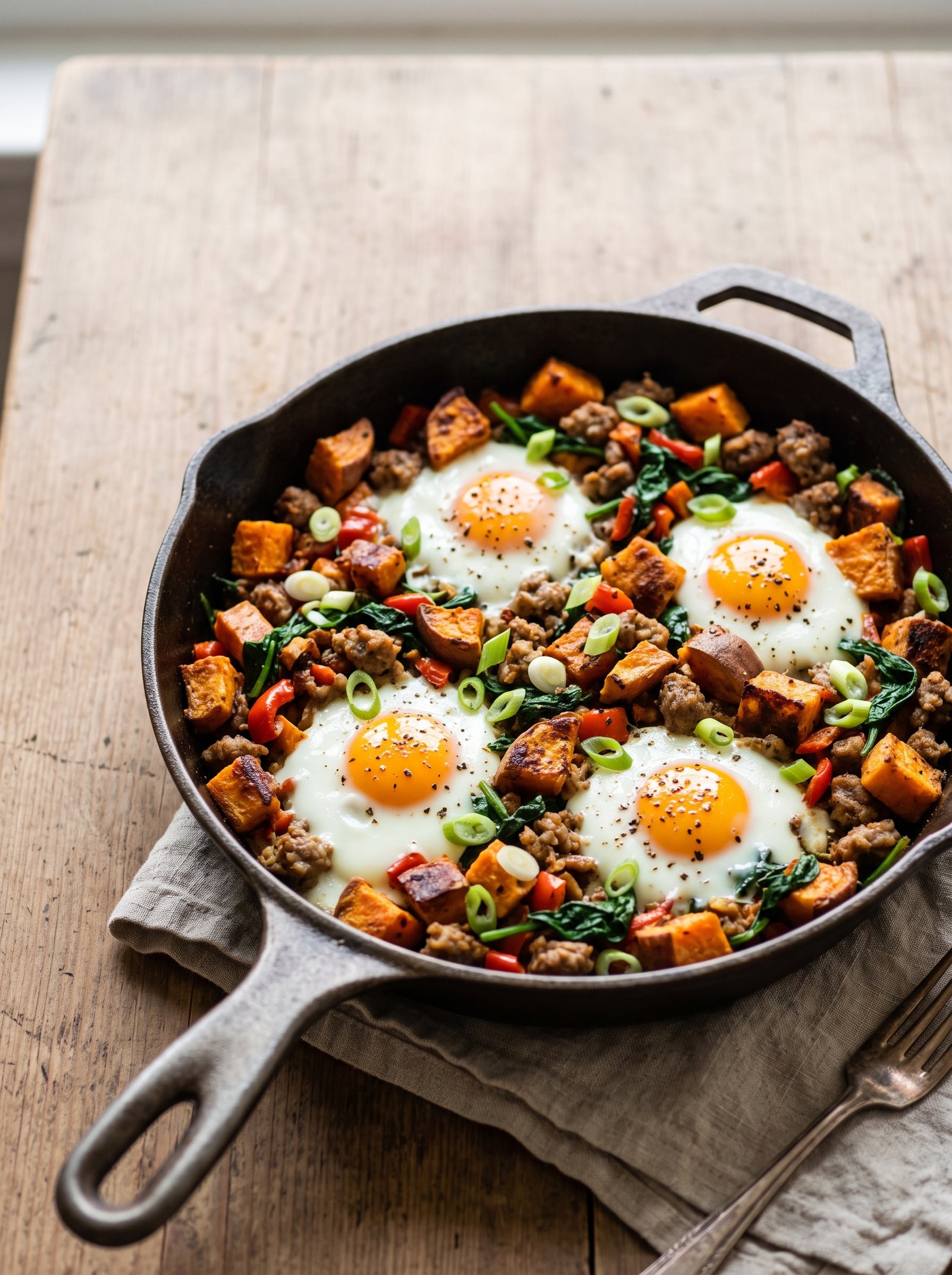
Sweet Potato Breakfast Hash with Eggs
Ingredients
Method
- Heat a large skillet over medium heat. Add the sausage and cook for 6 to 8 minutes, breaking it into small pieces, until cooked through. Transfer it to a plate, leaving a little of the drippings in the pan.
- Add olive oil if the skillet looks dry. Add the sweet potatoes, onion, and red bell pepper. Cook for 3 minutes, stirring occasionally.
- Stir in the garlic, smoked paprika, cumin, salt, and black pepper. Add the broth or water and cover the skillet.
- Cook for 8 to 10 minutes, stirring once or twice, until the sweet potatoes are fork-tender.
- Remove the lid and cook off any extra liquid. Let the potatoes sit briefly so their edges brown.
- Stir in the cooked sausage and spinach. Cook for 1 to 2 minutes, until the spinach wilts.
- Make four spaces in the hash and crack an egg into each one. Cover and cook for 4 to 6 minutes, until the egg whites are set and the yolks are cooked to your liking.
- Sprinkle with green onions and serve warm with optional hot sauce and sides.
Notes
Sweet Potato Breakfast Hash FAQs
Can I make sweet potato breakfast hash without sausage?
Yes. I leave out the sausage and use olive oil to cook the vegetables. Black beans or chopped mushrooms can make the hash more substantial.
How do I keep sweet potatoes from getting mushy?
I cut them into even cubes, use just enough broth to help them soften, and uncover the skillet once they’re tender so extra moisture cooks off.
Can I use regular potatoes instead?
Yes. Yukon Gold or russet potatoes work, though the cooking time may vary. I check that they’re tender before adding the spinach and eggs.
Can I make this hash ahead?
I can cook the hash without the eggs, refrigerate it, and reheat it in a skillet. I cook the eggs fresh when I’m ready to serve.
Disclaimer:
This recipe is provided for informational purposes. Results may vary depending on ingredients, measurements, and equipment. Follow safe food-handling practices. Nutrition information is an estimate and is not a substitute for professional medical advice.